

How Can a Submersible Pump Make Large Water Projects More Reliable?
2026-05-21
When I look at water transfer, drainage, irrigation, or wastewater projects, I rarely start by asking which pump looks strongest on paper. I usually ask a more practical question: will this equipment keep working when the site is wet, muddy, deep, remote, or difficult to maintain? That is why I pay close attention to manufacturers such as Tianjin Kairun Pump Industry Co., Ltd., a company focused on fluid transportation equipment, and why the Submersible Pump remains one of the most dependable choices for many demanding water management projects.
For buyers, the real concern is not only moving water from one place to another. The concern is downtime, unstable flow, difficult installation, rising electricity costs, motor failure, seal leakage, and poor adaptation to changing water levels. A well-selected Submersible Pump helps solve these problems because it works directly inside the liquid, reducing suction loss and allowing the pump to operate closer to the actual working condition.
Why Does a Submersible Pump Fit Difficult Water Conditions So Well?
I often see project owners choose surface pumps first because they are familiar and easy to inspect. But once the water source becomes deep, the pump room becomes limited, or the environment turns harsh, a submerged design often makes better sense.
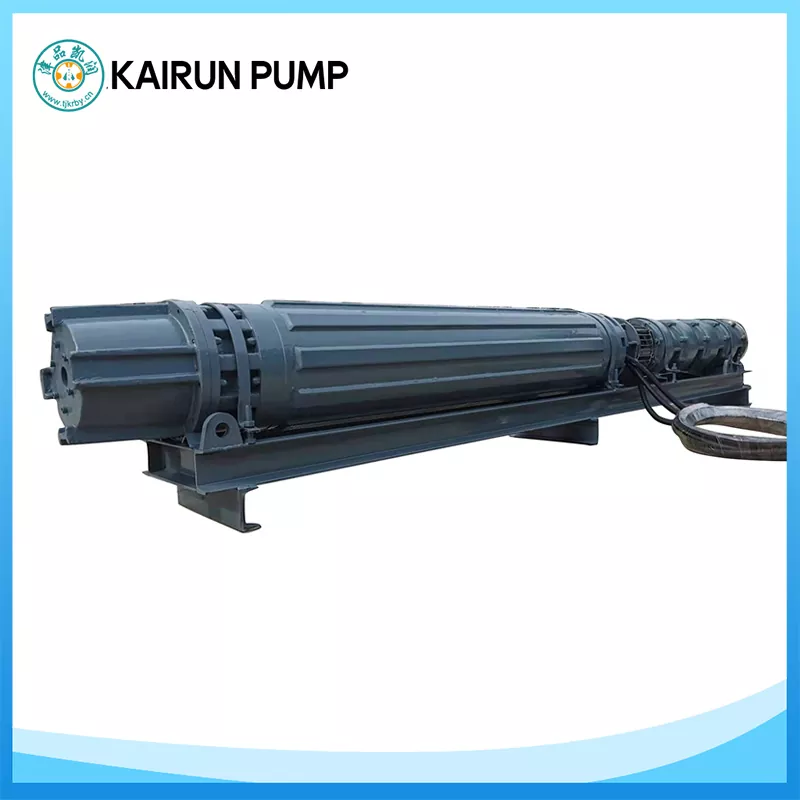
A Submersible Pump combines the pump body and motor in a sealed structure. Instead of pulling liquid from a distance, it pushes water from inside the source. This difference may sound simple, but it affects the entire system.
- It reduces suction-related performance loss.
- It helps maintain stable water delivery in deep or flooded areas.
- It lowers installation complexity in wells, reservoirs, pits, and pumping stations.
- It keeps noise lower because the equipment runs underwater.
- It can support continuous operation when correctly matched to the project.
In my experience, this is where many buyers start to see the value. The pump is not only a machine; it becomes part of the site’s stability plan.
What Problems Can a Submersible Pump Help Buyers Avoid?
Most pump failures are not caused by one dramatic mistake. They usually come from small mismatches: the wrong head, poor seal design, unsuitable materials, weak motor performance, or an installation layout that makes maintenance harder than expected.
A carefully engineered Submersible Pump can help reduce these risks by matching hydraulic performance, motor efficiency, sealing structure, and material selection to the actual application.
| Buyer Concern | What Usually Causes It | How the Right Pump Helps |
|---|---|---|
| Unstable water flow | Incorrect flow and head selection | Proper hydraulic matching supports steady discharge performance |
| High energy cost | Low motor efficiency or oversized equipment | Efficient motor design helps reduce unnecessary power consumption |
| Frequent leakage | Weak sealing structure or poor installation | Reliable mechanical seals protect motor components from water entry |
| Short service life | Unsuitable materials for sand, sewage, heat, or corrosion | Wear-resistant or corrosion-resistant materials improve durability |
| Difficult site layout | Limited space or deep water source | Compact submerged installation reduces the need for complex pump rooms |
Which Applications Benefit Most From a Submersible Pump?
I would not recommend one pump type for every job. That would be careless. But a Submersible Pump is especially useful when the working environment requires stable operation below the water surface or when space and suction conditions are not ideal.
- Agricultural irrigation systems that need continuous water delivery
- Municipal drainage projects where flood control matters
- Construction sites that need fast dewatering
- Mining projects where water may contain silt, gravel, or abrasive particles
- Industrial water supply systems with steady flow requirements
- Wastewater treatment facilities that need dependable pumping performance
- River, reservoir, and water conservancy projects with large-volume transfer needs
For example, in a municipal drainage project, I would focus on flow capacity, anti-clogging ability, seal reliability, and control system compatibility. In a mining drainage project, I would care more about wear resistance, head capacity, and impact tolerance. In an irrigation project, I would look closely at energy consumption and long running hours.
How Should Buyers Compare Different Submersible Pump Types?
One reason buyers struggle with pump selection is that the term Submersible Pump covers different designs. The best choice depends on the medium, temperature, installation space, and operating goal.
| Pump Type | Suitable Working Condition | Main Selection Focus |
|---|---|---|
| Horizontal submersible pump | Underground stations, compact spaces, renovated facilities | Space-saving layout, stable sealing, convenient installation |
| Floating submersible pump | Changing water levels, emergency drainage, temporary water transfer | Flexible placement, floating structure, quick deployment |
| Mining submersible pump | Mine drainage, pit water extraction, sediment-heavy water | Wear resistance, high head, strong drainage capacity |
| High temperature submersible pump | Hot water circulation, heating systems, hot spring extraction | Heat-resistant sealing, temperature-resistant materials |
| Stainless steel submersible pump | Corrosive fluids, seawater, chemical-related liquid transfer | 304 or 316L stainless steel, corrosion resistance, clean operation |
| Permanent magnet submersible pump | Projects with long operation hours and energy-saving requirements | Motor efficiency, reduced energy consumption, long-term operating cost |
Why Is Energy Efficiency So Important When Choosing a Submersible Pump?
Many buyers focus heavily on the purchase price, but I prefer to look at the cost over the full working life of the equipment. A pump that runs for many hours every day will consume far more money in electricity than its initial price difference may suggest.
This is why motor technology matters. A high-efficiency motor, suitable impeller design, and correct operating point can help reduce wasted power. In projects such as irrigation, municipal drainage, and industrial water supply, even a small efficiency improvement can become meaningful over months and years of use.
A good Submersible Pump should not only be able to start and run. It should run near the expected working point, avoid unnecessary overload, and maintain stable performance under real site conditions.
What Should I Check Before Buying a Submersible Pump?
Before I recommend any pump, I want the buyer to answer several practical questions. These details help prevent wrong selection and reduce future maintenance trouble.
- What is the required flow rate?
- What is the required head?
- Is the liquid clean water, sewage, hot water, mine water, seawater, or chemical liquid?
- Does the water contain sand, mud, fibers, gravel, or other particles?
- Will the pump operate continuously or only during emergencies?
- Is the installation vertical, horizontal, floating, or limited by space?
- What voltage, control cabinet, and protection system are required?
- How easy will maintenance access be after installation?
These questions may seem basic, but they are the difference between a pump that works smoothly and one that causes repeated site complaints.
How Does Tianjin Kairun Pump Industry Co., Ltd. Support Project Buyers?
From a purchasing perspective, I value suppliers that understand complete pumping systems, not only single products. Tianjin Kairun Pump Industry Co., Ltd. works with various water pump categories and supporting equipment, including submersible motors, permanent magnet motors, pipe fittings, valves, and electrical control cabinets. This matters because many real projects require coordinated equipment rather than one isolated pump.
For buyers handling water conservancy, agriculture, municipal engineering, industrial water supply, or drainage projects, this kind of product range can make communication easier. Instead of explaining the same project conditions to several disconnected suppliers, buyers can discuss the pump, motor, control system, and accessories as one working system.
I also pay attention to testing capability. A pump should not leave the factory only because it looks complete. Assembly, inspection, and performance testing are important steps for reducing risk before shipment.
Is a Submersible Pump Always the Best Choice?
No, and I would rather say that clearly. A Submersible Pump is not automatically the best option for every project. If the site requires frequent dry inspection, if the liquid condition is unusual, or if the system layout favors surface equipment, another pump type may be more suitable.
However, when the project involves submerged operation, deep water extraction, limited installation space, drainage under difficult conditions, or long-term water transfer, a submersible design often gives buyers a more practical solution.
The key is not simply choosing a pump name. The key is matching the pump structure to the actual site.
What Makes a Submersible Pump a Smarter Long-Term Investment?
For me, a smart pump investment has three qualities: it fits the condition, it reduces hidden operating costs, and it keeps the project running with fewer interruptions. A well-selected Submersible Pump can support all three.
- It can improve pumping stability because it works directly in the liquid.
- It can simplify installation where pump room space is limited.
- It can reduce noise and vibration compared with many surface installations.
- It can support demanding drainage, irrigation, municipal, and industrial projects.
- It can be customized according to flow, head, medium, material, and installation needs.
That is the real value buyers should look for. Not a dramatic promise, not a polished slogan, but reliable performance under the conditions that actually exist on site.
How Can Buyers Start the Right Submersible Pump Selection?
If you are planning a drainage, irrigation, municipal, mining, industrial water supply, or wastewater project, I would start with the working condition first and the model number second. Share the flow rate, head, liquid type, temperature, installation space, and operating hours. With those details, it becomes much easier to choose a pump that is efficient, durable, and suitable for long-term use.
For buyers who need a reliable Submersible Pump solution, Tianjin Kairun Pump Industry Co., Ltd. can help review project requirements and provide suitable pump options based on real operating conditions. Leave your inquiry today or contact us to discuss your project details and get a practical pumping solution for your next water management project.