

How Can a Submersible Sewage Pump Stop Drainage Problems Before They Become Expensive?
2026-05-15
When I look at wastewater projects, I rarely start with the pump model first. I start with the problem the site is already facing: clogged discharge lines, unstable flow, unpleasant maintenance work, emergency downtime, or a pump that looks powerful on paper but struggles in real sewage conditions. That is why I pay close attention to manufacturers with practical engineering experience, including Tianjin Kairun Pump Industry Co., Ltd., when evaluating a reliable Submersible Sewage Pump for municipal, industrial, construction, and commercial drainage systems.
A sewage pump is not a decorative piece of equipment. It works in dirty water, often out of sight, and it is expected to keep running when the environment is wet, corrosive, full of solids, and difficult to access. If it fails, the cost is never limited to the pump itself. A failure can stop production, flood a basement, delay a construction project, overload a treatment system, or create a public health issue. In this article, I want to explain how I judge a sewage pump from a real buyer’s point of view, and why the right submersible design can make drainage work more stable, safer, and easier to manage.
Why Does Sewage Pump Selection Matter More Than Many Buyers Expect?
I have seen many buyers compare sewage pumps only by power, price, and outlet size. That approach may look efficient at first, but it can lead to hidden problems later. Sewage water is unpredictable. It may contain sand, fibers, sludge, hair, food waste, plastic fragments, or chemical residue. A pump that performs well in clean water may lose efficiency or clog quickly in this kind of medium.
For me, the real value of a Submersible Sewage Pump is not just that it moves wastewater from one place to another. Its value is that it keeps doing the job under difficult conditions with less attention from the maintenance team. In many projects, the best pump is the one people do not have to keep checking every day.
- It should handle suspended solids without frequent blockage.
- It should operate safely while fully submerged.
- It should reduce installation complexity in confined spaces.
- It should resist moisture, corrosion, and long working hours.
- It should support stable discharge even when water levels change.
That is why I treat pump selection as a long-term operating decision rather than a one-time purchase. The cheapest unit is not always the lowest-cost solution. If a pump clogs, overheats, leaks, or needs constant manual cleaning, the maintenance cost can quickly erase the initial savings.
What Makes a Submersible Sewage Pump Different From an Ordinary Drainage Pump?
An ordinary drainage pump is usually designed for relatively clean or lightly contaminated water. A sewage pump has a harder job. It must move wastewater containing solids and fibrous materials while working in submerged conditions. This is where structure and engineering details become important.
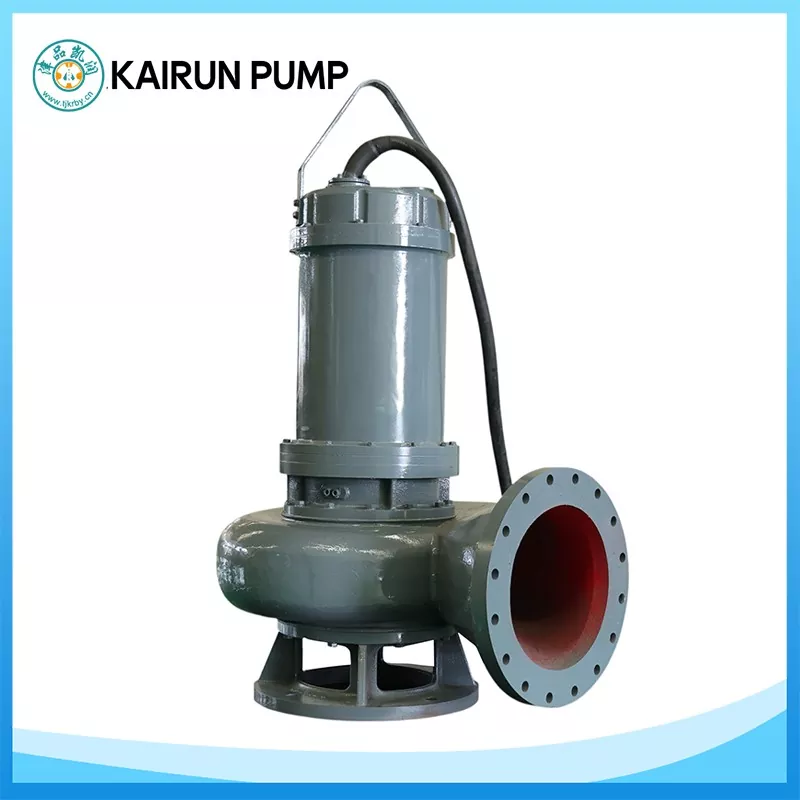
A well-designed Submersible Sewage Pump usually combines the pump body and motor into an integrated underwater unit. Because it works directly in the sump, tank, pit, or wastewater basin, it does not require long suction piping. This helps reduce suction loss and makes installation easier in many projects.
| Buyer Concern | What I Look For | Why It Matters |
|---|---|---|
| Frequent clogging | Anti-clogging impeller or cutting design | Reduces emergency maintenance and keeps discharge stable |
| Wet operating environment | Reliable motor sealing and strong protection grade | Helps protect the motor during long-term submerged use |
| Corrosive wastewater | Durable materials and corrosion-resistant components | Extends service life in municipal and industrial sewage |
| Limited installation space | Compact submersible structure | Simplifies installation in pits, tanks, basements, and pump stations |
| High maintenance cost | Easy access, stable operation, and fewer blockage points | Reduces labor time and unplanned shutdowns |
This difference is especially important for buyers who are replacing pumps after repeated failures. If the old pump could not tolerate solids or fibers, simply choosing a higher-power model may not solve the root problem. The hydraulic design, impeller form, sealing system, and motor protection all need to match the actual wastewater condition.
How Can a Submersible Sewage Pump Reduce Clogging in Real Wastewater Applications?
Clogging is one of the most frustrating problems in sewage handling. It creates odor, delays, labor cost, and sometimes dangerous maintenance conditions. In my opinion, anti-clogging ability is one of the first things buyers should examine before placing an order.
A good Submersible Sewage Pump should be able to pass or break down common sewage materials more effectively than a standard water pump. Depending on the working condition, buyers may consider vortex impeller designs, channel impellers, or cutting and chopping structures. The right choice depends on what the wastewater contains.
- For domestic sewage, I usually focus on solids passage and resistance to hair and tissue blockage.
- For food processing wastewater, I look for stronger handling of soft solids and grease-related buildup.
- For construction drainage, I pay attention to sand, mud, and abrasion resistance.
- For livestock or agricultural wastewater, I check whether the pump can handle mixed organic waste and sediment.
- For municipal systems, I care most about continuous duty, reliable sealing, and service convenience.
The pump should not only move water when everything is clean. It must still work when the sewage condition becomes messy. That is the difference between a pump that looks acceptable in a catalog and a pump that performs well on site.
Which Applications Benefit Most From a Submersible Sewage Pump?
I would recommend this type of pump whenever wastewater needs to be lifted, transferred, or discharged from a low point to a higher outlet or treatment system. Because the pump is installed directly in the liquid, it is especially useful where suction conditions are difficult or where space is limited.
| Application | Typical Challenge | How the Pump Helps |
|---|---|---|
| Municipal wastewater treatment | Continuous sewage inflow with mixed solids | Supports stable transfer from collection wells and treatment stages |
| Commercial buildings | Basement drainage and wastewater lifting | Helps prevent flooding and supports reliable discharge |
| Industrial plants | Process wastewater with particles or residue | Moves contaminated water while reducing manual cleaning needs |
| Construction sites | Muddy water and temporary drainage demands | Provides flexible pumping in pits, trenches, and low-lying areas |
| Septic tanks and sewage pits | Odor, solids, and difficult access | Works underwater and reduces exposed equipment risks |
In these applications, I care about more than flow rate. I also consider the working cycle, water depth, solids size, installation method, discharge distance, and whether the pump will operate automatically with a control system. These details decide whether the pump will run smoothly after installation.
What Product Advantages Should I Check Before Buying?
When I assess a Submersible Sewage Pump, I usually build a checklist around reliability, not only around price. A pump may look similar from the outside, but internal design quality can be very different. Buyers should ask practical questions before making a decision.
- Does the pump have a structure designed for sewage instead of clean water only?
- Can the impeller handle solids, fibers, and sludge without frequent blockage?
- Is the motor protected for long-term submerged operation?
- Are the sealing components suitable for wet, dirty, and demanding environments?
- Can the supplier help match flow, head, outlet size, and installation conditions?
- Is the pump easy to install, inspect, and maintain?
I also pay attention to whether the supplier understands real project use. A professional pump supplier should not simply ask what power you want. They should ask about the wastewater source, medium characteristics, installation depth, required flow, vertical lift, pipe length, working hours, and site limitations. That kind of conversation usually leads to a better pump choice.
How Do I Match Flow and Head Without Overspending?
Many buyers think a larger pump is always safer. I understand the instinct, but oversizing can create its own problems. A pump that is too large may consume unnecessary energy, run outside its best efficiency range, cause unstable operation, or increase wear. A pump that is too small may overload, discharge too slowly, or fail during peak inflow.
The better method is to match the Submersible Sewage Pump to the actual hydraulic requirement. I usually review these points first.
- The expected wastewater volume during normal and peak periods
- The vertical height from the water level to the discharge point
- The total pipe length and number of elbows
- The type and concentration of solids in the wastewater
- The working pattern, such as intermittent duty or continuous duty
- The need for backup pumps in critical drainage systems
This approach helps avoid two common mistakes. The first mistake is buying a low-cost pump that cannot handle peak load. The second mistake is buying a much larger pump than necessary and paying for extra energy year after year. For long-term projects, correct selection is usually more economical than blind oversizing.
Why Is Submersible Installation Often Easier for Sewage Projects?
Submersible installation can simplify many sewage projects because the pump works directly in the water. This reduces the need for complex suction arrangements and can make the system more compact. In basement drainage, sewage pits, municipal wells, and temporary construction drainage, that can be a major advantage.
Another benefit is noise control. Since the pump operates underwater, noise is often lower than with some above-ground pumping arrangements. For commercial buildings, residential compounds, and public facilities, this can make a practical difference.
I also like the flexibility of submersible systems. They can often be combined with guide rails, float switches, control panels, and automatic protection devices. With proper system design, the pump can start and stop according to water level, reducing manual operation and improving safety.
How Can Better Pump Design Lower Maintenance Pressure?
Maintenance teams do not want a pump that demands attention every few days. They need equipment that runs predictably. Good sewage pump design helps reduce maintenance pressure in several ways.
- Anti-clogging hydraulic design reduces the need to lift the pump for cleaning.
- Reliable sealing helps protect the motor from water ingress.
- Durable materials help resist corrosion and wear.
- Stable underwater operation reduces vibration and operating stress.
- Reasonable structure makes inspection and replacement work easier.
In my view, this is where a professional manufacturer can create real value. A pump does not need exaggerated claims. It needs stable engineering. When the design is right, the user can spend less time reacting to failures and more time managing the whole drainage system properly.
What Should Buyers Tell the Supplier Before Asking for a Quote?
A useful quotation depends on useful information. When buyers only ask for a price, the supplier may not have enough detail to recommend the right model. I would rather send a clear working condition summary first, because it saves time and reduces selection mistakes.
| Information to Provide | Why It Helps |
|---|---|
| Required flow rate | Helps determine the pump capacity |
| Total head or lifting height | Helps match the pump curve to the system |
| Wastewater type | Helps select the right impeller and material structure |
| Solid size and concentration | Helps reduce clogging and wear risks |
| Installation depth | Helps confirm submersible working conditions |
| Power supply | Helps match motor and electrical requirements |
| Continuous or intermittent use | Helps confirm duty requirements and protection needs |
With these details, the supplier can recommend a more suitable Submersible Sewage Pump instead of guessing. This is especially important for international procurement, where communication delays can slow down the project if the first selection is wrong.
Is a Submersible Sewage Pump a Good Choice for Long-Term Wastewater Control?
Yes, when the model is selected correctly and installed properly, I believe it is one of the most practical choices for wastewater control. It offers compact installation, direct submerged operation, strong drainage capability, and better suitability for sewage conditions than ordinary clean-water pumps.
For buyers, the key is to avoid treating every sewage pump as the same product. Wastewater is too complex for that. A reliable pump should be selected according to the real site conditions, the expected working time, the solid content, the required head, and the maintenance capacity of the user.
That is why I prefer to evaluate not only the product, but also the supplier’s ability to support selection. When a manufacturer can provide suitable pump structures, practical model guidance, and clear communication, the buyer gains more than equipment. They gain a drainage solution that is easier to trust.
How Can I Help You Choose the Right Submersible Sewage Pump?
If you are dealing with sewage transfer, basement drainage, municipal wastewater, industrial discharge, septic tank pumping, or construction site dewatering, choosing the right Submersible Sewage Pump can help reduce clogging, lower maintenance pressure, and improve long-term operating stability. I suggest sharing your flow rate, head, wastewater type, installation depth, and working conditions before making a final decision, because these details directly affect pump performance.
For buyers who want a dependable sewage pumping solution, Tianjin Kairun Pump Industry Co., Ltd. can provide product support and selection guidance based on real project requirements. If you are planning a new wastewater project or replacing pumps that fail too often, please leave an inquiry or contact us to discuss a suitable Submersible Sewage Pump solution for your application.