

Article Summary
A slurry pump is designed to transport liquid mixtures containing suspended solids under demanding operating conditions. Selecting an appropriate model requires evaluating particle size, solids concentration, abrasiveness, chemical compatibility, required flow rate, total dynamic head, and installation conditions. Wear-resistant materials, suitable sealing arrangements, correct operating practices, and preventive maintenance all contribute to equipment reliability. By considering service life and maintenance expenses alongside the purchase price, industrial buyers can choose a pumping solution that better matches their production requirements.
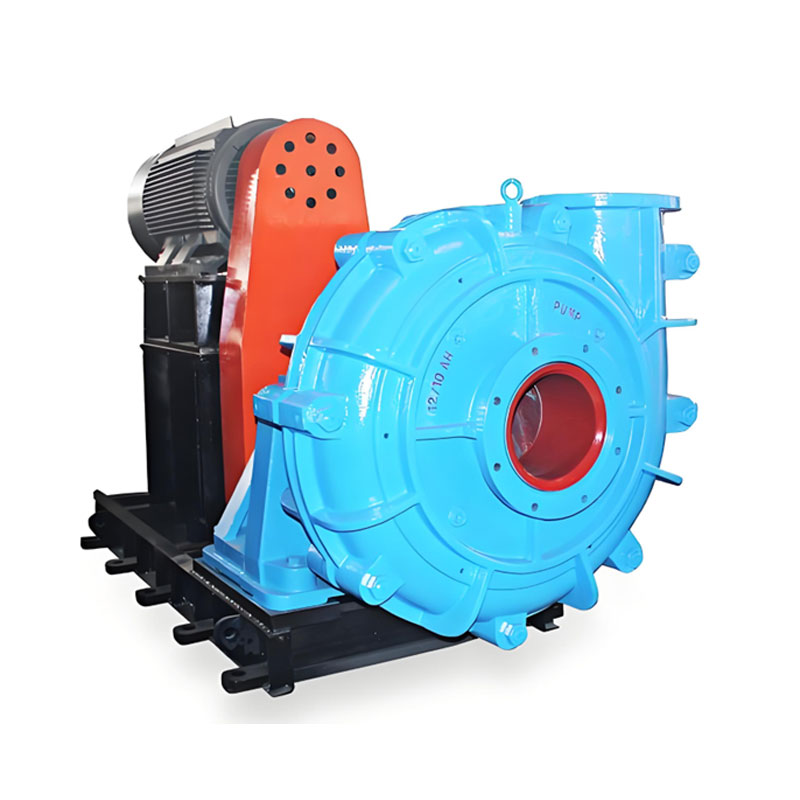
01What Is a Slurry Pump and Why Does It Matter?
A slurry pump is an industrial pumping device engineered to move mixtures of liquid and solid particles. Depending on the process, the mixture may contain sand, gravel, coal, mineral concentrates, ash, wastewater solids, or other suspended materials. Compared with conventional clean-water pumps, slurry pumps must cope with additional mechanical wear and potentially changing fluid properties.
When solid particles move through a pump, they can strike the impeller, slide along internal surfaces, and erode the casing. Hard or angular particles may cause especially aggressive wear. If the liquid also contains corrosive chemicals, the equipment can experience both mechanical abrasion and chemical degradation.
These operating conditions make slurry pump selection a process decision rather than a simple equipment purchase. A suitable design should deliver the required flow and pressure while accommodating the actual solids characteristics and maintenance requirements.
Wear Resistance
Appropriate wet-end materials help reduce erosion of impellers, liners, and casings when transporting abrasive solids.
Solids Handling
Suitable impeller geometry and passage clearances help the pump handle specified particles without unnecessary blockage.
Hydraulic Reliability
Correct sizing helps maintain the required flow and head under realistic operating conditions.
Maintainability
Accessible components and replaceable wear parts can simplify inspections and reduce repair time.
02Which Industries Depend on Slurry Pumps?
Slurry pumps serve a wide range of industries in which liquids must carry suspended solids through processing equipment or pipelines. The correct pump configuration depends on the properties of the mixture and the layout of the installation.
Mining and Mineral Processing
Mining operations use slurry pumps to transport ore mixtures, grinding discharge, mineral concentrates, and tailings. These duties can involve hard particles, high solids concentrations, and continuous operation. Wear-resistant impellers, liners, and robust bearing assemblies are important considerations.
Sand, Gravel, and Dredging
Sand processing and dredging systems move mixtures containing abrasive sediment and, in some cases, larger particles. Buyers should confirm the maximum particle size, required solids throughput, suction conditions, and pipeline characteristics before choosing a pump.
Wastewater and Environmental Treatment
Wastewater treatment facilities may need to transfer sludge, grit, and other solid-laden liquids. Fibrous material, changing solids concentration, and settling tendencies can influence the choice of pump and the need for blockage prevention.
Power Generation and Industrial Manufacturing
Power plants, chemical processing facilities, and manufacturing operations may use slurry pumps for ash handling, process residues, and specialized mixtures. Chemical compatibility and temperature limits become especially important when the liquid contains aggressive substances or operates outside normal ambient conditions.
In each industry, selecting equipment based on actual process conditions helps avoid the common mistake of choosing a pump simply because its nominal capacity appears sufficient.
03Understanding Different Slurry Pump Types
Different pump configurations address different installation and process requirements. Understanding their strengths and limitations helps narrow the available options before requesting a quotation.
| Pump Type | Typical Application | Main Consideration |
|---|---|---|
| Horizontal slurry pump | Processing plants, mineral handling, and fixed pipeline systems | Requires suitable floor space, foundation, and suction arrangements |
| Vertical sump pump | Pits, sumps, and installations where the liquid level is below floor level | Submergence depth, shaft arrangement, and solids accumulation must be assessed |
| Submersible slurry pump | Wet wells, excavation sites, and submerged pumping duties | Motor sealing, cooling, lifting access, and electrical protection are critical |
| Heavy-duty centrifugal slurry pump | Continuous transfer of abrasive solid-liquid mixtures | Impeller design, operating speed, wear materials, and hydraulic duty require careful matching |
These categories can overlap: many heavy-duty slurry pumps are centrifugal pumps, and some centrifugal designs are available in horizontal, vertical, or submersible configurations. The best choice depends on the actual duty rather than the category name alone.
For highly viscous or shear-sensitive mixtures, a conventional centrifugal pump may not be the most appropriate solution. Depending on the material and required output, progressive cavity, peristaltic, or other positive-displacement pumps may deserve consideration. A qualified application assessment can help determine whether a slurry pump or another pumping technology is better suited to the task.
04How to Select the Right Slurry Pump for Your Application
A reliable selection process begins with accurate information about the slurry and the pumping system. Missing details can lead to an undersized motor, inappropriate wear materials, unstable operation, or a pump that cannot meet production targets.
1. Identify the Solids and Their Characteristics
Determine the type of solid, particle size distribution, maximum particle dimension, hardness, and particle shape. Sharp, hard particles can wear internal components differently from soft or rounded particles. Maximum particle size is particularly important because average particle size alone may not reveal the risk of blockage.
2. Measure Solids Concentration and Slurry Density
Record the solids concentration by weight or volume, together with the overall slurry density. Concentration changes can affect pump power demand, flow behavior, wear rate, and the ability of particles to remain suspended. If concentration varies throughout the operating cycle, the design should account for those fluctuations.
3. Calculate the Required Flow Rate and Total Dynamic Head
Flow rate describes the quantity of slurry the system must transport within a given period. Total dynamic head accounts for elevation differences, pipeline friction, fittings, valves, and required discharge pressure. Both values should be calculated for the actual slurry service, not estimated solely from pipe diameter.
4. Evaluate Suction Conditions
Insufficient suction pressure, excessive suction lift, restricted inlet piping, or poor inlet geometry can cause unstable flow and cavitation. Check available net positive suction head against the pump's required value under the intended operating conditions. Also consider whether solids can settle in the suction line during low-flow periods.
5. Consider Operating Hours and Future Changes
A pump running continuously in a mineral processing plant may need a different reliability strategy from one used intermittently for site dewatering. Consider expected daily operating hours, startup frequency, seasonal variations, and planned increases in throughput. Avoid excessive oversizing as a substitute for proper engineering calculations.
05How to Select Suitable Slurry Pump Materials
Material selection strongly influences wear life, corrosion resistance, maintenance intervals, and replacement costs. No single material is ideal for every slurry because abrasion, particle impact, temperature, and chemical exposure can interact in different ways.
| Material Option | Potential Advantages | Important Limitations | Typical Consideration |
|---|---|---|---|
| High-chrome alloy | Good hardness and abrasion resistance in suitable service | Corrosion resistance and impact suitability depend on the alloy and operating conditions | Hard mineral particles and abrasive slurry |
| Natural rubber lining | Elastic surface can resist certain forms of particle erosion | Compatibility depends on particle shape, temperature, and liquid chemistry | Suitable fine-particle slurries with compatible chemistry |
| Polyurethane or other elastomers | Can offer useful wear resistance in selected applications | Performance varies with hardness, temperature, and chemical exposure | Applications requiring a tailored elastomer solution |
| Stainless or specialty alloys | Can provide improved corrosion resistance in suitable environments | Grade selection must account for both corrosion and abrasive wear | Chemically demanding slurry applications |
Match the Material to the Actual Failure Mechanism
When abrasive wear dominates, a suitable hard alloy may be appropriate. For fine particles under compatible chemical conditions, an elastomer lining may offer advantages. When corrosion is the primary concern, a corrosion-resistant alloy or compatible lining may be necessary.
However, these are starting points rather than universal rules. Large particles can cause impact damage, certain chemicals attack materials that perform well in neutral water, and higher temperatures can change elastomer performance. Material decisions should therefore be based on the complete operating environment.
Do Not Overlook Replaceable Wear Parts
Replaceable impellers, liners, throat bushings, and shaft sleeves can make routine servicing more manageable. When comparing equipment, ask how these components are inspected, how they are replaced, and whether spare parts can be supplied within your required maintenance window.
06Improving Slurry Pump Performance and Energy Efficiency
High operating costs are not always caused by an inefficient motor. Hydraulic mismatch, worn components, poor suction conditions, and excessive pumping speed can also increase energy consumption or reduce useful output.
Operate Near the Appropriate Duty Point
Where practical, select a pump that operates near its best efficiency point for the required duty. A pump operating too far from its intended range may experience increased vibration, recirculation, unstable flow, or accelerated wear. The actual operating point should be evaluated using the manufacturer's performance curves and suitable slurry corrections.
Control Pump Speed and Wear
Higher impeller speed can increase particle impact energy and accelerate wear in many abrasive applications. If process requirements allow, a suitable lower-speed arrangement may reduce wear and energy demand. Any speed adjustment must still maintain adequate transport velocity and avoid excessive solids settling.
Keep the Pipeline Properly Designed
Pipeline diameter, length, bends, valves, and elevation changes all affect system resistance. Flow that is too slow may allow particles to settle, while unnecessarily high velocity can increase friction losses and erosion. The design should balance reliable solids transport with acceptable energy consumption and wear.
Monitor Performance Trends
Track flow rate, discharge pressure, motor current, vibration, bearing temperature, and seal condition where applicable. Compare readings with a stable operating baseline. Gradual changes may indicate impeller wear, developing blockages, suction problems, or a change in slurry properties.
07Maintenance Practices That Reduce Downtime
Even a correctly selected slurry pump requires planned maintenance. Abrasive service gradually changes internal clearances and component surfaces, so inspections should be based on manufacturer guidance, operating severity, and observed wear history.
Establish a Routine Inspection Schedule
- Check for abnormal vibration, unusual noise, and changes in operating temperature.
- Inspect seals, gaskets, and connections for leakage or deterioration.
- Review motor current, flow, pressure, and other available performance data.
- Inspect suction screens and upstream equipment for restrictions or oversized solids.
- Check lubrication condition and bearing performance according to the manufacturer's instructions.
- Record wear-part condition and replacement dates to improve future maintenance planning.
Prevent Dry Running and Incorrect Startup
Follow the manufacturer's startup procedure, including priming or filling requirements where applicable, seal support arrangements, lubrication checks, and valve positions. Never assume that every slurry pump can run dry or operate safely with a closed discharge valve. These conditions depend on the pump design and can cause serious damage if handled incorrectly.
Plan Spare Parts Before a Failure Occurs
Identify components whose failure would stop production, such as impellers, liners, shaft sleeves, bearings, and seals. Stocking selected critical spares can shorten repair times, especially when replacement parts have long procurement lead times.
Make Maintenance Safe
Before inspection or repair, isolate the equipment from electrical and process energy sources, release trapped pressure, drain hazardous contents, and follow the site's lockout/tagout procedures. Allow hot components to cool and use appropriate protective equipment. Maintenance should be performed by qualified personnel in accordance with the manufacturer's service instructions.
08Common Slurry Pump Problems and Practical Solutions
Recognizing symptoms early can help maintenance teams investigate problems before they cause an unplanned shutdown. The table below provides an initial troubleshooting framework; the correct corrective action depends on the specific pump and process.
| Observed Problem | Possible Causes | Recommended Checks |
|---|---|---|
| Reduced flow rate | Worn impeller, blocked suction line, incorrect operating point, or changed slurry properties | Check suction conditions, flow readings, wear components, and system resistance |
| Excessive vibration | Misalignment, imbalance, bearing damage, cavitation, or unstable foundations | Inspect alignment, mounting, bearing condition, and suction performance |
| Frequent blockage | Oversized solids, unsuitable passage clearance, low transport velocity, or fibrous debris | Verify particle size, inspect upstream screening, and review pump selection |
| Rapid component wear | Material mismatch, excessive speed, high solids concentration, or poor operating conditions | Review slurry data, material compatibility, operating speed, and wear patterns |
| Seal leakage | Seal wear, incorrect installation, shaft movement, or inadequate seal support | Follow the seal manufacturer's inspection and repair procedure |
| Motor overload | Excessive slurry density, unsuitable operating point, mechanical friction, or incorrect sizing | Check current draw, slurry density, impeller condition, and hydraulic duty |
Avoid replacing parts based on symptoms alone. For example, low flow can result from a worn impeller, but it can also be caused by a restricted suction line or a process change. A structured diagnosis helps prevent repeated repairs that fail to address the underlying cause.
09What Should Industrial Buyers Check Before Purchasing?
Purchase price is only one part of the cost of owning a slurry pump. Energy consumption, wear-part replacement, maintenance labor, spare-parts availability, and production losses can significantly influence long-term expenditure.
Evaluate the Complete Cost of Ownership
Compare quotations using the same operating conditions and performance requirements. Confirm the proposed flow rate, total dynamic head, motor rating, material specification, and expected operating range. Ask suppliers to identify any assumptions or limitations in their recommendations.
Review Manufacturing and Service Capabilities
Assess the supplier's ability to provide technical documentation, suitable material options, replacement parts, and application support. Clear communication about operating conditions and service expectations can help reduce specification errors and avoidable delays.
Use This Pre-Purchase Checklist
- The pump meets the required flow rate and total dynamic head.
- Maximum particle size and solids concentration have been confirmed.
- Wet-end materials are suitable for abrasion, chemistry, and temperature.
- The motor and drive are appropriate for the expected operating range.
- Suction conditions and pipeline losses have been evaluated.
- Sealing arrangements match the slurry and installation conditions.
- Wear parts and critical spares can be obtained within an acceptable lead time.
- Installation, maintenance, warranty, and technical support requirements are clear.
For procurement teams, a technically appropriate pump with manageable maintenance requirements may offer better long-term value than a cheaper unit that requires frequent repairs. Discuss the complete duty with the supplier before finalizing the specification.
Working with Furkey
When evaluating slurry handling equipment, Furkey can be included in the supplier consultation process to discuss your application requirements and identify the information needed for equipment selection. Prepare your process data, operating conditions, and maintenance priorities before requesting a recommendation. This makes it easier to compare suitable configurations and assess their expected fit with your operation.
For the most useful technical assessment, confirm the proposed model's performance data, material compatibility, installation requirements, and spare-parts arrangements with the supplier before placing an order.
10Frequently Asked Questions About Slurry Pumps
1. What is the main purpose of a slurry pump?
A slurry pump transfers mixtures of liquid and suspended solids, including sand, mineral particles, sludge, and industrial residues. Its design accommodates the additional wear and solids-handling challenges associated with these mixtures.
2. How is a slurry pump different from a water pump?
A slurry pump is designed for service involving solid particles and often incorporates more robust wet-end components, suitable impeller passages, and wear-resistant materials. A conventional water pump may wear rapidly, clog, or operate inefficiently if used in an unsuitable slurry application.
3. Which material is best for a slurry pump?
There is no universally best material. High-chrome alloys may suit hard, abrasive particles, while rubber or other elastomers can be appropriate for selected fine-particle slurries. Corrosive fluids may require specialty alloys or compatible linings. The decision should consider particle characteristics, chemistry, temperature, and impact conditions together.
4. What information is needed to size a slurry pump?
Important information includes required flow rate, total dynamic head, particle size distribution, solids concentration, slurry density, viscosity, temperature, chemical composition, suction conditions, and operating schedule. Reliable data improves the accuracy of the selection.
5. Why does a slurry pump lose flow?
Common causes include impeller wear, suction restrictions, blockages, air entering the system, changed slurry properties, and operation outside the intended duty range. Check the complete system before deciding which component to replace.
6. How often should a slurry pump be maintained?
Maintenance frequency depends on operating hours, abrasiveness, solids concentration, chemical conditions, and equipment design. Follow the manufacturer's recommendations and adjust inspection intervals using actual condition data and wear history.
7. Can a slurry pump handle large solid particles?
Some slurry pumps can handle relatively large particles, but the permissible size depends on the pump design, impeller passages, speed, and material properties. Confirm the maximum particle dimension and any limitations with the manufacturer before operation.
8. How can I reduce slurry pump operating costs?
Match the pump to the actual duty, use compatible wear materials, maintain appropriate pipeline velocity, monitor performance, replace worn components before secondary damage occurs, and plan critical spare parts. Evaluate energy, maintenance, and downtime together rather than focusing only on the initial purchase price.
9. Is a higher-capacity slurry pump always a better choice?
No. Oversizing can cause operation away from the intended duty point, unnecessary energy consumption, and increased wear in some conditions. Select capacity based on calculated process demand and expected operating variations, with appropriate engineering margins.
10. What should I provide when asking Furkey about a slurry pump?
Provide the slurry composition, maximum particle size, solids concentration, temperature, pH, required flow rate, total dynamic head, installation arrangement, operating hours, and any current equipment problems. Photos, process drawings, and existing pump data can also help clarify the application.
Conclusion: Build a More Reliable Slurry Handling System
Choosing the right slurry pump requires a complete understanding of the material being transported and the demands of the pumping system. Particle size, solids concentration, abrasiveness, chemical compatibility, flow rate, head, and installation conditions all influence equipment performance and service life.
Careful material selection, correct hydraulic sizing, routine condition monitoring, and well-planned maintenance can help reduce premature wear, limit unplanned downtime, and control operating expenses. Industrial buyers should also evaluate spare-parts availability and technical support when comparing suppliers.
By preparing accurate process data and discussing application requirements with a qualified supplier, you can make a more informed decision and develop a slurry handling solution suited to your operating goals.
Looking for a Slurry Pump Solution for Your Application?
Every slurry handling system has its own challenges, from abrasive mineral particles and changing solids concentrations to demanding flow requirements and maintenance schedules. Furkey can be part of your supplier consultation as you evaluate suitable pumping equipment for your project.
Prepare your operating parameters and equipment requirements to help identify the right questions for your pump selection. For further product information and application discussions, contact us and take the next step toward a dependable slurry handling solution.
Review Your Pump Requirements