

How Does a Mobile Oil Filter Machine Improve Oil Management in Industrial Operations?
2025-12-18
Abstract
A Mobile Oil Filter Machine is a specialized on-site oil purification solution designed to remove particulate contaminants, moisture, and degradation by-products from industrial lubricating and hydraulic oils. This article provides a comprehensive explanation of how a Mobile Oil Filter Machine operates, how it integrates into maintenance workflows, and why it has become a critical asset across manufacturing, power generation, mining, and heavy equipment sectors. The central focus is on operational logic, filtration methodology, technical configuration, and long-term oil lifecycle optimization, presented in a structured, professional, and search-optimized format.
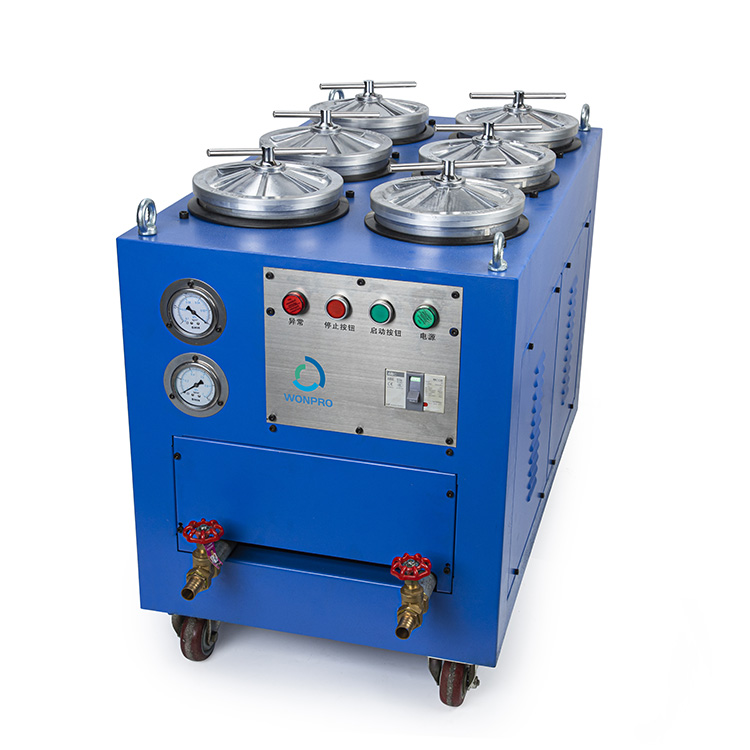
Table of Contents
- 1. How a Mobile Oil Filter Machine Functions in Real-World Applications
- 2. How Technical Parameters Define Filtration Performance
- 3. How Mobile Oil Filtration Supports Predictive Maintenance Strategies
- 4. How Mobile Oil Filter Machines Are Evolving with Industry Demand
1. How a Mobile Oil Filter Machine Functions in Real-World Applications
A Mobile Oil Filter Machine is engineered to provide flexible, point-of-use oil purification without requiring fixed installation. Its primary function is to circulate contaminated oil through a multi-stage filtration system, restoring oil cleanliness levels to meet or exceed equipment manufacturer standards.
In practical deployment, the machine is connected directly to oil reservoirs, hydraulic systems, gearboxes, or transformers. The internal pump draws oil into the system, where it passes sequentially through coarse filtration, fine filtration, and optional dehydration modules. Each stage targets a specific class of contaminants, ensuring comprehensive oil conditioning.
Mobility is a defining characteristic. The integrated wheeled frame allows maintenance teams to service multiple machines or production lines using a single filtration unit. This operational flexibility reduces capital expenditure while increasing asset utilization efficiency.
From a process-control perspective, a Mobile Oil Filter Machine operates independently of the host equipment, allowing filtration to occur during operation or downtime, depending on system sensitivity and safety requirements.
2. How Technical Parameters Define Filtration Performance
The effectiveness of a Mobile Oil Filter Machine is determined by a combination of mechanical design, filtration accuracy, flow control, and adaptability to oil types. Below is a consolidated technical overview illustrating standard professional configurations.
| Parameter | Specification Range | Operational Significance |
|---|---|---|
| Flow Rate | 10–300 L/min | Determines filtration speed and suitability for small or large oil systems |
| Filtration Accuracy | 1–10 microns | Controls removal efficiency of fine particulates and wear debris |
| Operating Pressure | 0.4–0.8 MPa | Ensures stable oil circulation without system stress |
| Applicable Oil Types | Hydraulic oil, gear oil, turbine oil, transformer oil | Defines cross-industry compatibility |
| Power Supply | 380V / 50Hz (customizable) | Supports global industrial electrical standards |
These parameters collectively determine how the machine performs under different load conditions. Selecting appropriate specifications is essential to avoid under-filtration, pressure instability, or unnecessary energy consumption.
3. How Mobile Oil Filtration Supports Predictive Maintenance Strategies
Oil cleanliness is directly correlated with equipment reliability. A Mobile Oil Filter Machine plays a foundational role in predictive maintenance by stabilizing oil quality, which in turn minimizes abrasive wear and corrosion inside mechanical systems.
By integrating mobile filtration into routine maintenance schedules, operators can maintain consistent ISO cleanliness codes without performing full oil replacements. This approach reduces lubricant consumption and limits unplanned downtime caused by contamination-induced failures.
Mobile systems also support condition-based maintenance models. Oil samples can be taken before and after filtration to evaluate contamination trends. These data points help maintenance engineers forecast component wear rates and schedule interventions with higher accuracy.
The ability to deploy filtration precisely where needed allows maintenance teams to respond rapidly to contamination events, such as seal failures or environmental ingress, without interrupting broader production workflows.
Mobile Oil Filter Machine – Common Questions and Answers
How does a Mobile Oil Filter Machine remove moisture from oil?
Moisture is removed through dedicated dehydration stages such as vacuum separation or coalescing filters, which extract dissolved and free water without altering oil chemistry.
How often should mobile oil filtration be performed?
Filtration frequency depends on operating conditions, contamination exposure, and oil analysis results, but most industrial systems benefit from periodic filtration every three to six months.
How does filtration extend oil service life?
By removing solid particles, water, and oxidation by-products, filtration slows chemical degradation and reduces mechanical wear, allowing oil to remain within specification for longer periods.
4. How Mobile Oil Filter Machines Are Evolving with Industry Demand
As industrial systems become more automated and precision-driven, oil cleanliness requirements continue to tighten. Mobile Oil Filter Machines are evolving to meet these expectations through enhanced filtration media, real-time monitoring, and modular design.
Advanced models now incorporate differential pressure indicators, digital flow meters, and contamination sensors. These features allow operators to verify filtration effectiveness during operation and adjust parameters dynamically.
Sustainability considerations are also influencing design evolution. By enabling oil reuse and minimizing waste disposal, mobile filtration aligns with environmental compliance initiatives and cost-reduction strategies.
Within this context, the brand Wonpro has established a strong presence by delivering Mobile Oil Filter Machine solutions engineered for durability, precision filtration, and operational flexibility across diverse industrial environments.
Organizations seeking to optimize oil management practices, reduce maintenance risk, and improve asset longevity are encouraged to evaluate Mobile Oil Filter Machine solutions as part of a comprehensive lubrication strategy. For technical consultation, configuration guidance, or application-specific recommendations, contact Wonpro to discuss tailored filtration solutions.