

How Does a Pneumatic Anchor Rod Drill Deliver Reliable Rock Reinforcement Results?
2025-12-11
A Pneumatic Anchor Rod Drill is a specialized drilling system engineered for installing anchor rods in geotechnical, mining, tunneling, slope stabilization, and underground support applications. It operates using compressed air to generate high-frequency percussive force and rotary torque, enabling rapid penetration through diverse geological formations including fractured rock, soft strata, and mixed ground. The objective of this article is to provide a comprehensive and technically grounded overview of the Pneumatic Anchor Rod Drill, including its structural characteristics, operational specifications, application suitability, and user-driven concerns commonly raised in field environments. The discussion also explores industry shifts that directly affect procurement criteria, equipment lifecycle considerations, and future development paths within the drilling segment.
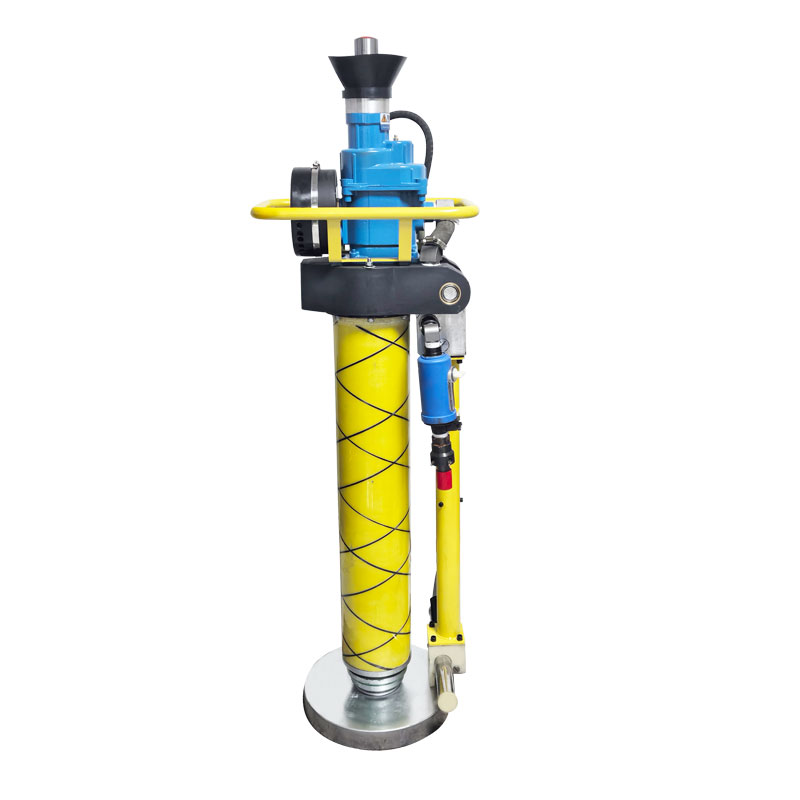
Below is a consolidated technical parameter table that aligns with common industrial-grade Pneumatic Anchor Rod Drill models used globally. The table is intended to support procurement, engineering design, and field deployment planning by presenting the product’s mechanical and performance metrics in a clear format.
Key Performance Parameters of a Pneumatic Anchor Rod Drill
| Parameter Category | Technical Specification |
|---|---|
| Power Source | Compressed air system (0.4–0.63 MPa typical operating range) |
| Impact Frequency | 1600–2100 blows/min depending on model configuration |
| Drilling Diameter | 28–45 mm standard; optional configurations up to 50 mm |
| Drilling Depth | 2–15 m depending on rod system and geology |
| Air Consumption | 55–75 L/s under normal continuous drilling load |
| Rotary Speed | Adjustable 200–350 rpm for different formation hardness levels |
| Applicable Rod Type | Hollow anchor rods, solid bars, self-drilling anchor systems |
| Noise Level | 105–115 dB under load with recommended protective gear |
| Weight | 24–32 kg depending on model and shank design |
| Recommended Use Cases | Slope reinforcement, tunnel support, mining roadway stabilization, coal-rock interface drilling |
Why Do Construction and Mining Projects Continue to Rely on Pneumatic Anchor Rod Drills?
The long-term adoption of Pneumatic Anchor Rod Drills derives from their ability to deliver consistent force output even under unstable geological conditions. Field operations in mining galleries, tunnel portals, and open-cut slopes typically require drilling precision that can accommodate unpredictable rock hardness transitions, water ingress, and confined workspace constraints. Because pneumatic power systems are inherently safer in environments with gas hazards and dust concentration, they remain a preferred choice across underground operations.
Additionally, the equipment integrates an impact-rotary mechanism designed to maintain drilling stability at constant thrust levels. This stability directly influences anchor rod installation quality, bonding consistency, and final reinforcement integrity. The rigid internal piston structure ensures energy transmission efficiency, reducing vibration loss and enabling operators to maintain tool positioning during extended drilling cycles.
These considerations, combined with the increasing demand for high-density reinforcement in both civil and mining projects, continue to drive steady global usage of Pneumatic Anchor Rod Drills.
How Should Engineers Select the Appropriate Pneumatic Anchor Rod Drill for Varying Geological Formations?
Selecting the correct drill involves evaluating project-specific geological and operational constraints. Engineers must define formation hardness, drilling angle requirements, expected anchor rod penetration depth, and available air supply capacity. The following considerations typically guide selection decisions:
Geological Adaptability
Hard formations require higher impact energy and faster blow frequency to accelerate fragmentation at the drill bit’s cutting interface. Medium-hard strata benefit from adjustable rotary speed, allowing operators to optimize bit penetration and minimize premature bit wear.
Air Supply Infrastructure
A compressed air system capable of maintaining stable flow and pressure is critical. Air fluctuations can cause inconsistent impact delivery, reduced penetration rate, and energy inefficiency. Most job sites use independent compressor units with reserved flow capacity above the drill’s baseline requirement.
Anchor Rod System Compatibility
Depending on reinforcement design, engineers may choose hollow self-drilling anchors or solid rods. A Pneumatic Anchor Rod Drill with a compatible chuck, shank, and torque range ensures seamless integration and prevents damage to rod threads or couplings.
Operator Ergonomics and Safety
Weight distribution, vibration level, and handle design influence operational duration and operator fatigue. Projects requiring overhead drilling or high-inclination drilling angles often require models with optimized center-of-gravity balance.
Lifecycle Cost
Procurement decisions increasingly factor in long-term operating expenses, including bit consumption rate, lubrication requirements, and maintenance intervals. Pneumatic drills with modular internal components typically offer lower maintenance cost.
Common Questions About Pneumatic Anchor Rod Drills (FAQ)
Q1: What maintenance steps are essential to ensure stable drilling output?
A: Regular lubrication of internal moving components, inspection of air hoses for leakage, and replacement of worn piston rings are necessary to maintain consistent drilling force. Operators should also monitor exhaust air temperature, as excessive heat often indicates insufficient lubrication or internal friction buildup. Scheduled disassembly for carbon cleaning extends equipment lifespan and preserves impact energy efficiency.
Q2: How can operators reduce performance loss when drilling in water-rich formations?
A: Water-rich formations require stable compressed air delivery to expel moisture and maintain bit cutting performance. Installing a water-separator upstream of the drill, using anticorrosive lubricants, and selecting bits designed for wet drilling conditions help prevent internal corrosion, air passage blockage, and reduced drilling speed. Effective moisture management minimizes torque drop-off and protects internal chambers from rust formation.
How Will Pneumatic Anchor Rod Drilling Technology Evolve to Meet Reinforcement Demands in the Next Decade?
Global infrastructure development, increasing tunnel lengths, deeper mining operations, and stricter ground support regulations are advancing the evolution of pneumatic drilling systems. Several key trends are shaping future developments:
Energy-Optimized Piston and Valve Systems
Improved airflow routing and precision-machined valve blocks are expected to increase energy transmission efficiency while minimizing air loss per stroke. These design changes will allow higher drilling penetration rates without requiring larger compressors.
Smart Monitoring Integration
While pneumatic systems remain mechanically driven, add-on monitoring modules are emerging in the market. These include vibration sensors, cycle counters, and torque feedback systems that provide data insights into wear prediction and maintenance scheduling. This trend reduces downtime by identifying performance degradation earlier.
Lower Vibration Technology
Refinements in internal piston geometry, damping systems, and handle materials are guiding manufacturers toward lower vibration designs. Reduced vibration not only enhances operator comfort but contributes to more stable bit-to-rock interaction, improving hole straightness and anchor installation quality.
Environmentally Conscious Air Management
Eco-driven design standards are prompting manufacturers to make air consumption more efficient. Reducing overall air usage without compromising torque or impact force is becoming a key engineering objective in modern pneumatic drills used in underground and civil reinforcement work.
Expanded Use in Hybrid Support Systems
As ground support strategies increasingly combine mechanical bolts, chemical anchoring solutions, and self-drilling anchors, Pneumatic Anchor Rod Drills must adapt to a broader range of rod types and coupling configurations. Interchangeable front-end accessories and multi-mode rotary systems are expected to become more common.
A Pneumatic Anchor Rod Drill is a critical asset for reinforcement operations across mining, tunneling, and civil engineering. Its air-powered impact mechanism ensures reliable performance in demanding geological environments, while its compatibility with varied anchor rod systems enables consistent reinforcement quality. The industry continues to adopt these drills due to their robustness, adaptability, and safety advantages in confined or gas-rich environments.
As reinforcement standards tighten and drilling complexity increases, equipment reliability and lifecycle efficiency will become even more important. Manufacturers such as CMM are contributing to this evolution by developing Pneumatic Anchor Rod Drills optimized for stability, energy efficiency, and long-term durability across diverse field applications.
For procurement inquiries, technical specifications, or project-oriented consultation, please contact us to obtain detailed support tailored to your operational requirements.