

How Does an H-Frame Press Improve Precision and Efficiency in Industrial Manufacturing?
2026-03-20
Article Summary:
An H-frame press is a powerful and versatile machine widely used in metal forming, assembly, and heavy-duty industrial operations. Its rigid structure, high load capacity, and precise control capabilities make it a preferred solution for manufacturers seeking efficiency and consistency. This article explains how an H-frame press works, its structural advantages, technical specifications, and how it solves key operational challenges such as deformation, low accuracy, and production inefficiencies.
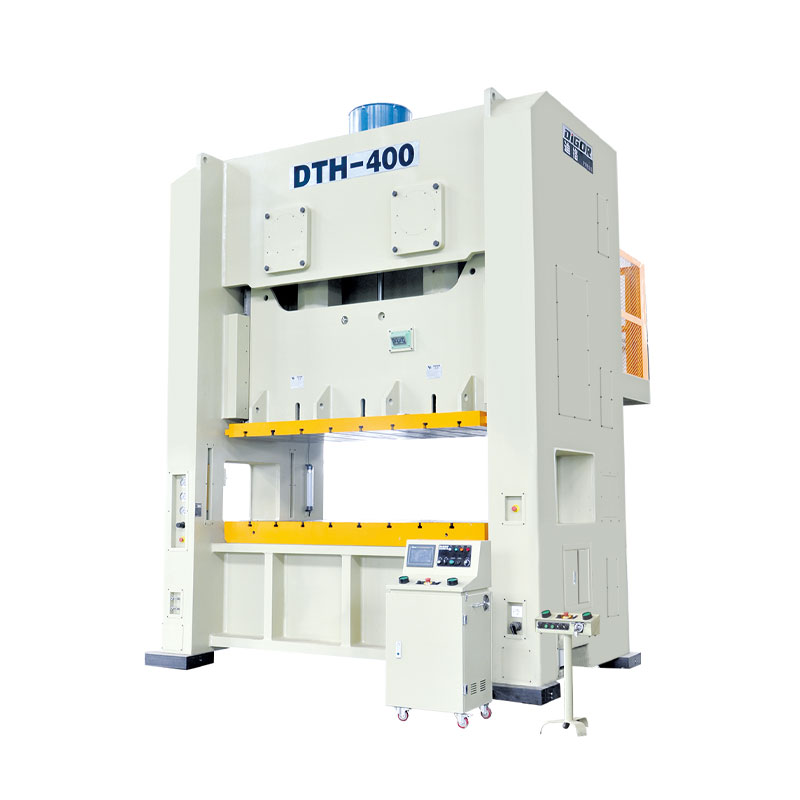
Table of Contents
- 1. Overview of H-Frame Press
- 2. How an H-Frame Press Works
- 3. Key Structural Components
- 4. Core Advantages for Industrial Use
- 5. Technical Parameters
- 6. How to Choose the Right H-Frame Press
- 7. Common Applications
- 8. Frequently Asked Questions
1. Overview of H-Frame Press
An H-frame press is a type of industrial pressing machine characterized by its “H”-shaped frame structure. This design provides exceptional rigidity and stability, allowing the machine to handle high-tonnage operations without deformation.
The frame typically consists of two vertical columns connected by upper and lower beams, forming a closed structure that distributes force evenly across the machine. :contentReference[oaicite:0]{index=0}
Manufacturers such as Digor design advanced H-frame presses to meet modern production requirements, offering solutions for precision forming, bending, stamping, and assembly processes.
2. How an H-Frame Press Works
The working principle of an H-frame press depends on its drive system, which can be mechanical, hydraulic, or servo-driven.
Basic Operating Process:
- Energy Generation: A motor or hydraulic pump generates force
- Force Transmission: The force is transferred through a ram or piston
- Material Processing: The ram applies pressure to shape or compress the material
In hydraulic systems, pressure is transmitted through fluid according to Pascal’s law, ensuring consistent and evenly distributed force during operation. :contentReference[oaicite:1]{index=1}
This controlled force application allows for high precision and repeatability in manufacturing processes.
3. Key Structural Components
The efficiency of an H-frame press depends on its robust design and integrated systems:
- Frame Structure: Heavy-duty steel construction ensures minimal deformation
- Ram (Slider): Moves vertically to apply pressure
- Hydraulic or Mechanical Drive System: Generates and controls force
- Control System: Adjusts pressure, speed, and stroke
- Worktable: Supports the material or die
- Guiding System: Maintains alignment and precision
The closed-frame design significantly reduces deflection and ensures accurate load distribution. :contentReference[oaicite:2]{index=2}
4. Core Advantages for Industrial Use
H-frame presses are designed to address several common production challenges:
- High Structural Rigidity: Prevents deformation under heavy loads
- Improved Precision: Maintains alignment between tooling components
- High Load Capacity: Suitable for large-scale and heavy-duty operations
- Versatility: Supports multiple processes such as punching, bending, and forming
- Long Service Life: Reduced vibration and wear extend equipment lifespan
Compared to open-frame designs, H-frame presses provide superior stability and accuracy, making them ideal for demanding industrial environments. :contentReference[oaicite:3]{index=3}
5. Technical Parameters
| Parameter | Typical Range |
|---|---|
| Nominal Force | 200 kN – 10,000 kN+ |
| Stroke Length | 3 – 650 mm |
| Working Speed | Adjustable |
| Drive Type | Hydraulic / Mechanical / Servo |
| Control System | Manual / PLC / CNC |
| Frame Material | Welded Steel / Cast Steel |
Specifications vary depending on application requirements and customization options.
6. How to Choose the Right H-Frame Press
Selecting the correct H-frame press is critical for operational efficiency. Consider the following factors:
1. Tonnage Requirement
- Choose a press with 20–30% higher capacity than your maximum load
2. Application Type
- Stamping and punching → Mechanical press
- Deep drawing → Hydraulic press
- High precision tasks → Servo press
3. Workspace Size
- Ensure compatibility with tooling and workpiece dimensions
4. Automation Level
- Consider integration with robotic feeding or automated systems
5. Manufacturer Capability
Working with reliable suppliers such as Digor ensures high-quality engineering, customization, and long-term technical support.
7. Common Applications
H-frame presses are widely used across various industries:
- Metal forming and stamping
- Automotive component manufacturing
- Appliance and hardware production
- Assembly and press-fitting operations
- Maintenance and repair workshops
Their versatility and precision make them essential equipment in modern manufacturing systems.
8. Frequently Asked Questions
Q1: What is the difference between H-frame and C-frame press?
A: H-frame presses provide higher rigidity and load capacity, while C-frame presses are more compact but less stable under heavy loads.
Q2: Which drive system is better—hydraulic or mechanical?
A: Hydraulic presses offer better control and flexibility, while mechanical presses are faster for high-volume production.
Q3: How does an H-frame press improve precision?
A: Its closed-frame structure minimizes deflection and maintains alignment between tooling components.
Q4: What maintenance is required?
A: Regular inspection of hydraulic systems, lubrication of moving parts, and alignment checks are essential.
Q5: Is it suitable for automation?
A: Yes, modern H-frame presses can integrate with PLC or CNC systems for automated production lines.
Conclusion
An H-frame press is a critical investment for manufacturers aiming to achieve high precision, stability, and efficiency in production. Its robust structure and advanced control systems make it suitable for a wide range of industrial applications.
By choosing a reliable partner like Digor, businesses can benefit from customized solutions, durable equipment, and long-term operational reliability.
For tailored solutions, competitive pricing, and expert guidance, contact us today to optimize your manufacturing efficiency.