

How Does an Ultra-high Purity Pressure Gauge Work?
2026-02-10
Abstract
An Ultra-high Purity Pressure Gauge is a critical measurement instrument used in industries where even microscopic contamination can compromise safety, product quality, or system stability. This article provides a comprehensive explanation of how an Ultra-high Purity Pressure Gauge works, why it is essential in high-purity environments, and how to select the right model for demanding applications. By addressing common customer pain points such as accuracy loss, material compatibility, leakage risks, and long-term reliability, this guide helps engineers, procurement specialists, and system integrators make informed decisions.
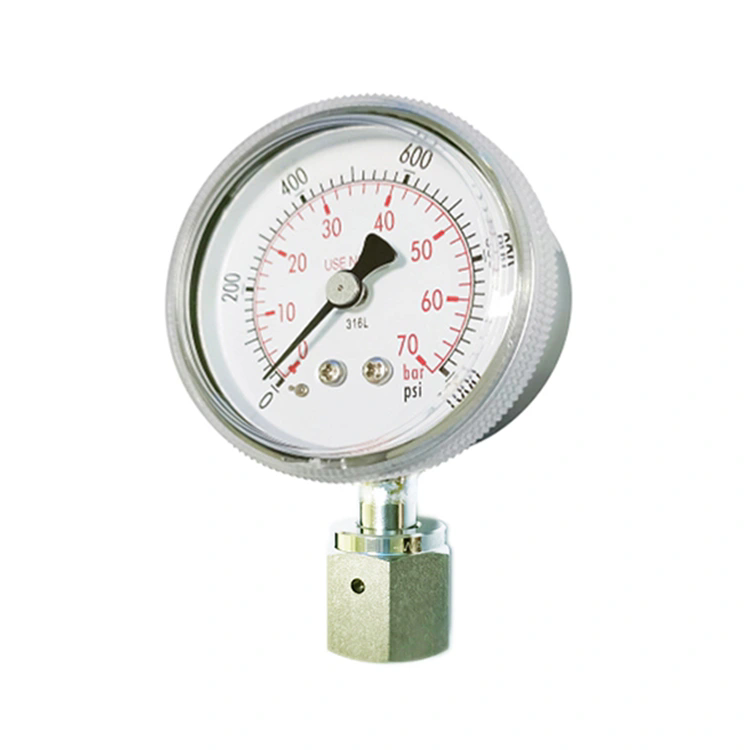
Table of Contents
- Introduction to Ultra-high Purity Pressure Gauges
- Core Working Principles
- Key Customer Challenges in High-Purity Pressure Measurement
- Material Selection and Structural Design
- Performance Parameters That Matter
- Typical Application Scenarios
- Selection Guidelines for Different Systems
- Comparison Table: Standard vs. Ultra-high Purity Pressure Gauges
- Frequently Asked Questions
- Conclusion and Contact Information
Introduction to Ultra-high Purity Pressure Gauges
Ultra-high Purity Pressure Gauges are designed for systems where process media must remain uncontaminated at all times. Unlike conventional pressure gauges, these instruments are engineered with special materials, surface treatments, and sealing technologies to prevent particle shedding, chemical reactions, and gas adsorption.
They are widely used in semiconductor manufacturing, pharmaceutical production, specialty gas distribution, and advanced chemical processing. In these environments, even trace impurities introduced by measurement devices can lead to yield loss, safety incidents, or regulatory non-compliance.
Core Working Principles
The fundamental operating principle of an Ultra-high Purity Pressure Gauge is based on mechanical or electronic pressure sensing, combined with a contamination-controlled flow path. Pressure from the system medium acts on a sensing element, which converts mechanical deformation into a readable output.
What differentiates ultra-high purity designs is not the sensing principle alone, but the strict control of internal geometry, surface roughness, and material stability. Internal cavities are minimized, dead volumes are reduced, and all wetted surfaces are treated to resist corrosion and particle generation.
Key Customer Challenges in High-Purity Pressure Measurement
Customers operating high-purity systems often face recurring issues when using standard pressure gauges. These challenges include:
- Contamination caused by material outgassing or particle release
- Pressure drift due to chemical interaction with sensing components
- Leakage at threaded or welded connections
- Inconsistent readings under high-temperature or high-pressure conditions
An Ultra-high Purity Pressure Gauge directly addresses these concerns through optimized design and strict manufacturing control, ensuring stable and repeatable measurement performance.
Material Selection and Structural Design
Material selection is the foundation of ultra-high purity performance. Commonly used materials include high-grade stainless steel with electropolished surfaces, which significantly reduce surface roughness and limit particle adhesion.
Structural design also plays a critical role. Seamless welding, metal-to-metal sealing, and reduced internal joints help eliminate potential contamination sources. These features ensure that the pressure gauge integrates seamlessly into ultra-clean systems without compromising purity.
Performance Parameters That Matter
When evaluating an Ultra-high Purity Pressure Gauge, several performance parameters should be prioritized:
- Measurement accuracy and long-term stability
- Pressure range compatibility with the system
- Temperature tolerance under continuous operation
- Surface finish quality of wetted components
These parameters directly influence system reliability and operational efficiency, especially in continuous or automated production environments.
Typical Application Scenarios
Ultra-high Purity Pressure Gauges are commonly deployed in environments where process integrity is critical. Typical scenarios include:
- Gas delivery systems for semiconductor fabrication
- Pharmaceutical cleanroom processes
- High-purity chemical synthesis and transfer lines
- Laboratory-grade analytical equipment
In each case, the gauge must maintain accuracy while ensuring that no external or internal contaminants enter the process stream.
Selection Guidelines for Different Systems
Selecting the correct Ultra-high Purity Pressure Gauge requires a clear understanding of system conditions and operational goals. Factors such as media type, pressure range, installation orientation, and maintenance cycles should be evaluated before procurement.
A well-matched gauge not only improves measurement reliability but also reduces downtime and long-term operational costs.
Comparison Table: Standard vs. Ultra-high Purity Pressure Gauges
| Feature | Standard Pressure Gauge | Ultra-high Purity Pressure Gauge |
|---|---|---|
| Material Quality | General industrial metals | High-grade, electropolished materials |
| Contamination Control | Limited | Strictly controlled |
| Application Scope | Conventional systems | High-purity and critical processes |
| Long-term Stability | Moderate | High |
Frequently Asked Questions
What makes an Ultra-high Purity Pressure Gauge different from a regular gauge?
The difference lies in material purity, surface treatment, and structural design, all of which are optimized to prevent contamination and ensure stable measurement in sensitive environments.
Can Ultra-high Purity Pressure Gauges handle corrosive media?
Yes, when properly selected, these gauges are compatible with a wide range of corrosive or reactive media due to their specialized materials and finishes.
How often should calibration be performed?
Calibration intervals depend on system requirements, but ultra-high purity gauges are designed for long-term stability, reducing the frequency of recalibration.
Conclusion and Contact Information
Understanding how an Ultra-high Purity Pressure Gauge works is essential for maintaining system integrity, product quality, and operational safety in high-purity environments. By focusing on material quality, structural design, and performance stability, these gauges provide a reliable solution to the most common pressure measurement challenges.
CSHERUN offers professionally engineered Ultra-high Purity Pressure Gauge solutions designed to meet demanding industrial standards. For customized configurations, technical consultation, or project-specific recommendations, contact us today and connect with the CSHERUN team to support your high-purity pressure measurement needs.