

How to Optimize Composites Hydraulic Press for High-Performance Manufacturing?
2026-07-01
Abstract
Composites Hydraulic Press systems are critical in modern advanced manufacturing, enabling the production of lightweight, high-strength composite components used in aerospace, automotive, marine, and energy industries. However, many manufacturers struggle with inconsistent molding quality, inefficient cycle times, high maintenance costs, and insufficient pressure control precision. This article explores how to optimize a Composites Hydraulic Press system to achieve stable performance, improved productivity, and long-term operational efficiency. It also highlights engineering principles, selection criteria, maintenance strategies, and real industrial use cases, with insights from TAITIAN, a specialized manufacturer of hydraulic press solutions for composite forming applications.
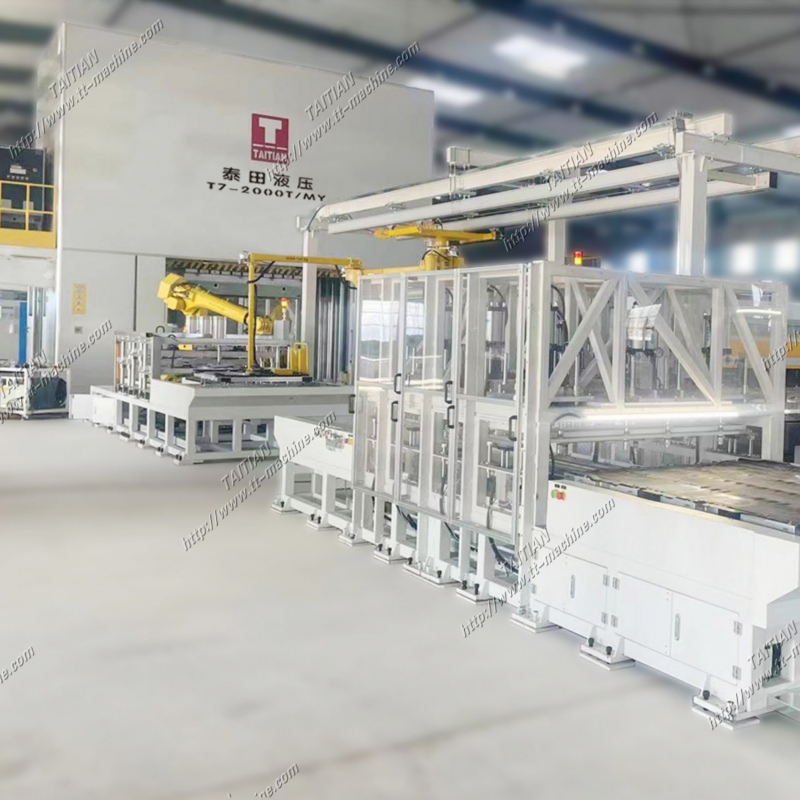
Table of Contents
- 1. Introduction to Composites Hydraulic Press Systems
- 2. Working Principle and System Architecture
- 3. Common Operational Challenges
- 4. Optimization Strategies for Performance Improvement
- 5. Technical Comparison Table
- 6. Industrial Applications
- 7. Maintenance and Lifecycle Management
- 8. TAITIAN Engineering Advantages
- 9. Frequently Asked Questions
- 10. Conclusion
1. Introduction to Composites Hydraulic Press Systems
A Composites Hydraulic Press is a high-tonnage industrial machine designed to mold composite materials such as carbon fiber, glass fiber, and resin-based laminates under controlled pressure and temperature. These systems are widely used in industries requiring precision, structural integrity, and lightweight performance characteristics.
Unlike conventional stamping presses, composite hydraulic presses must handle curing processes, variable resin flow, and strict dimensional tolerances. This makes system optimization essential for consistent product quality and production efficiency.
2. Working Principle and System Architecture
The hydraulic press operates by converting hydraulic energy into mechanical force through a cylinder-piston system. The press applies uniform pressure across heated molds to ensure composite material curing and shaping.
- Hydraulic Power Unit: Generates stable pressure flow
- Main Cylinder: Delivers pressing force
- Heated Platens: Ensure controlled curing temperature
- Control System: Regulates pressure, speed, and timing
- Mold System: Defines final product geometry
Precision synchronization between these systems determines final product quality and production consistency.
3. Common Operational Challenges
Manufacturers often face several recurring issues when operating composite hydraulic presses:
- Uneven pressure distribution leading to material defects
- Temperature instability during curing cycles
- Long cycle times reducing production efficiency
- Hydraulic leakage or pressure loss
- High energy consumption in continuous production environments
These challenges directly impact production cost, scrap rates, and product reliability.
4. Optimization Strategies for Performance Improvement
Optimizing a Composites Hydraulic Press requires a combination of mechanical calibration, system upgrades, and process control improvements. Below are key strategies widely implemented in advanced manufacturing environments.
4.1 Pressure Control Optimization
- Use proportional servo hydraulic systems
- Implement closed-loop pressure feedback control
- Calibrate pressure sensors regularly
4.2 Thermal System Enhancement
- Adopt multi-zone heating platens
- Improve insulation layers to reduce heat loss
- Integrate real-time temperature monitoring systems
4.3 Cycle Time Reduction
- Optimize mold preheating procedures
- Reduce idle hydraulic movement
- Implement automated loading/unloading systems
4.4 Energy Efficiency Improvement
- Install energy recovery hydraulic circuits
- Use variable frequency drive (VFD) motors
- Reduce standby power consumption
5. Technical Comparison Table
| Feature | Conventional Press | Optimized Composites Hydraulic Press |
|---|---|---|
| Pressure Control | Basic mechanical regulation | Servo-controlled precision system |
| Temperature Stability | Limited zone control | Multi-zone digital thermal control |
| Cycle Efficiency | Long cycle time | Reduced cycle time via automation |
| Energy Consumption | High | Optimized energy recovery system |
| Product Consistency | Moderate variation | High repeatability and precision |
6. Industrial Applications
Composites Hydraulic Press systems are widely applied in industries where material performance is critical:
- Aerospace structural components
- Automotive lightweight body panels
- Wind turbine blades and energy systems
- Marine hull structures
- High-performance sports equipment
Each application demands different pressure profiles, temperature curves, and curing cycles, making customization essential.
7. Maintenance and Lifecycle Management
Proper maintenance ensures long-term reliability and stable production performance. A structured maintenance plan includes:
- Hydraulic oil quality inspection every 500 operating hours
- Seal and gasket replacement schedules
- Regular calibration of pressure and temperature sensors
- Inspection of structural alignment and platen flatness
Preventive maintenance significantly reduces unexpected downtime and extends machine lifespan.
8. TAITIAN Engineering Advantages
TAITIAN specializes in designing and manufacturing advanced Composites Hydraulic Press systems tailored for high-precision industrial applications. With decades of engineering expertise, TAITIAN focuses on integrating hydraulic stability, intelligent control systems, and robust mechanical structures.
Key advantages of TAITIAN solutions include:
- High-precision servo hydraulic control systems
- Customized press tonnage and mold compatibility
- Advanced thermal uniformity control technology
- Stable long-cycle industrial operation capability
- Engineering support for turnkey production lines
By continuously refining system architecture and production intelligence, TAITIAN ensures manufacturers achieve consistent composite quality and reduced operational costs.
9. Frequently Asked Questions
Q1: What materials can be processed using a Composites Hydraulic Press?
It can process carbon fiber, fiberglass, SMC, BMC, and other resin-based composite materials.
Q2: How does pressure affect composite quality?
Uniform pressure ensures proper resin distribution and eliminates voids or delamination in the final product.
Q3: What is the main factor affecting cycle time?
Temperature control efficiency and mold preheating are the most significant factors affecting cycle duration.
Q4: Why is servo-hydraulic control important?
It provides precise pressure and speed control, improving consistency and reducing energy waste.
Q5: How often should maintenance be performed?
Routine checks should be conducted weekly, with deeper inspections scheduled quarterly or based on usage intensity.
10. Conclusion
Optimizing a Composites Hydraulic Press is essential for achieving high-quality composite manufacturing outcomes. From pressure control and thermal management to system automation and maintenance planning, each element plays a critical role in overall performance. Manufacturers that adopt advanced optimization strategies can significantly improve productivity, reduce waste, and enhance product consistency.
TAITIAN continues to deliver advanced hydraulic press solutions that help industries meet increasingly complex composite manufacturing demands with precision and reliability.
For customized solutions, technical consultation, or system upgrades, contact us today and connect with TAITIAN engineering experts to elevate your composite production capabilities.