

What Makes a Centrifugal Pump a Smarter Choice for Stable Water Delivery and Lower Operating Pressure?
2026-04-27
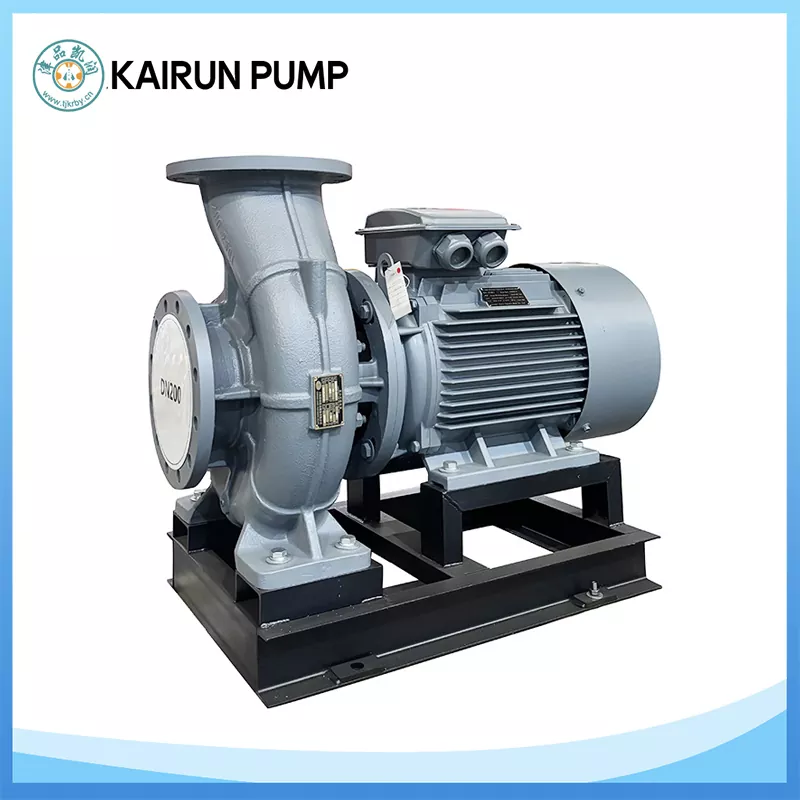
When I evaluate pumping equipment for water transfer, building services, irrigation, or industrial circulation, I do not only look at flow rate on paper. I pay attention to installation logic, long-term operating stability, maintenance pressure, and how well the equipment fits the actual system. That is why I keep coming back to the Centrifugal Pump as a practical solution in many projects. Over time, I have also noticed how manufacturers such as Tianjin Kairun Pump Industry Co., Ltd. are increasingly being discussed in conversations about reliable fluid transportation, not because of flashy claims, but because users care about pumps that can run steadily, integrate into real systems, and reduce avoidable trouble once the project goes live. A well-designed Centrifugal Pump can do exactly that when it is selected with the right application in mind.
Why Do So Many Buyers Worry About Pump Selection Before a Project Even Starts?
I often see the same concern from buyers and engineers. They are not simply asking whether a pump can move water. They are asking whether it can keep working without creating new problems. A poor pump choice can lead to unstable pressure, wasted energy, difficult installation, frequent maintenance shutdowns, or a mismatch between the pump and the actual duty point.
In many projects, the pain points usually look like this:
- I need steady flow instead of performance that looks good only in a catalog.
- I want a pump that fits my pipeline layout without forcing expensive redesigns.
- I need operating efficiency that helps control energy costs over time.
- I cannot afford repeated downtime caused by weak sealing, poor material choice, or unstable hydraulic performance.
- I want a supplier that understands complete pumping systems, not just a single isolated product.
That is exactly where a properly matched Centrifugal Pump starts to stand out. It gives me a balance of continuous flow capability, familiar working principles, and wide application flexibility, which makes the purchasing decision much less risky.
How Does a Centrifugal Pump Actually Help Me Solve Everyday System Problems?
I like the Centrifugal Pump because its working principle is simple enough to trust and efficient enough to serve in demanding environments. Liquid enters through the inlet, the impeller accelerates it outward, and the casing helps convert velocity into pressure so the fluid can move smoothly through the system. In real terms, that means I get a pump type that is widely accepted for stable transport in municipal, agricultural, and industrial settings.
From a user perspective, the value is not in the theory alone. The real value is what this design helps me avoid. When I choose the right model, I can reduce flow fluctuation, support continuous operation, and make system integration easier for both new construction and replacement work.
| Common Buyer Problem | How a Centrifugal Pump Helps | Why It Matters in Real Use |
|---|---|---|
| Unstable water delivery | Supports continuous and smooth fluid movement | Helps maintain more reliable system output |
| High operating burden | Uses efficient hydraulic action through the impeller and casing | Can reduce avoidable energy loss when matched correctly |
| Limited installation space | Some designs such as inline structures are easier to fit into piping systems | Improves layout flexibility in buildings and equipment rooms |
| Maintenance pressure | Relies on a mature and widely used pump structure | Makes operation and servicing more manageable for many users |
| Different application demands | Can be selected in different configurations for head, flow, and system type | Allows better adaptation to project-specific needs |
Which Applications Show the Real Strength of a Centrifugal Pump?
I do not think of this product as a one-scene pump. Its strength is that it fits into many water movement tasks without feeling over-specialized. That matters to buyers who want dependable performance across common engineering scenarios.
These are the applications where I most often see strong value:
- Municipal water supply and drainage systems that require continuous delivery
- Agricultural irrigation networks where dependable distribution matters more than complicated design
- Industrial cooling and circulation systems that need stable fluid transport during long operating cycles
- Water conservancy and pumping station projects where consistent hydraulic performance is important
- Infrastructure transfer systems that benefit from steady pressure and flexible model selection
In those cases, a Centrifugal Pump is not attractive because it sounds technical. It is attractive because it is practical. It solves the day-to-day problem of moving fluid efficiently without turning the pumping section into the most fragile part of the project.
What Should I Look At If I Want Better Efficiency Without Creating New Maintenance Problems?
When I review pump options, I never judge a model by one performance figure alone. A strong choice comes from several details working together. I usually focus on hydraulic design, motor efficiency, sealing structure, wear resistance, and how easy the unit is to integrate into the site conditions.
For example, some centrifugal pump designs are built with optimized impellers, energy-saving motors, and sealing arrangements intended to support stable operation. That combination matters because efficiency without reliability is not very useful. If a pump saves energy but becomes difficult to maintain, the operating team still loses time and money.
Here is the checklist I would personally use before making a purchase decision:
- Does the pump match the real flow and head requirements instead of a guessed demand?
- Is the hydraulic design intended to reduce unnecessary energy loss?
- Are the sealing and wear-related details suitable for the expected working conditions?
- Will installation be straightforward within the actual pipeline or station layout?
- Can the supplier support testing, assembly, and related system components if needed?
That is why I see the best Centrifugal Pump selection as a system decision rather than a simple product order.
How Can I Compare Different Centrifugal Pump Types Without Getting Lost in Technical Noise?
I find it helpful to compare the pump types based on use conditions instead of reading every specification line in isolation. Different configurations are built to solve different site problems.
| Pump Type | Typical Strength | Best Fit Scenario |
|---|---|---|
| Multistage Centrifugal Pump | Higher head capability through multi-stage impeller design | Long-distance transfer, pressurization, and higher-pressure transport needs |
| Horizontal Inline Centrifugal Pump | Pipeline-friendly layout that can save installation space | Building services, circulating water systems, and compact piping environments |
| General Centrifugal Pump Configuration | Stable continuous fluid movement and broad usability | Municipal, irrigation, industrial circulation, and infrastructure systems |
When I compare them this way, the decision becomes much more practical. I am no longer asking which one sounds more advanced. I am asking which Centrifugal Pump design actually matches the system pressure, site layout, and service objective.
Why Does Manufacturer Capability Matter Almost As Much As Pump Performance?
I have learned this the hard way. Even a decent pump design can become a frustrating purchase if the manufacturer cannot support production consistency, assembly quality, or performance verification. A buyer needs more than a product name. A buyer needs confidence that the equipment has been built and checked in a controlled way.
This is one reason supplier background matters. Tianjin Kairun Pump Industry Co., Ltd. presents itself as a manufacturer focused on fluid transportation equipment with integrated research, manufacturing, assembly, and testing support. The company also highlights its production base in Baodi District, Tianjin, a manufacturing area of more than 15,000 square meters, and pump testing before delivery. For me, these points matter because they suggest a more complete manufacturing process rather than a trading-only approach. They also offer related equipment such as submersible pumps, axial flow pumps, valves, fittings, motors, and control cabinets, which is useful when a project needs broader system coordination.:contentReference[oaicite:1]{index=1}
In simple terms, I trust a pump supplier more when I can see that they understand the environment the pump will work in, not just the product page it appears on.
What Advantages Do I Actually Gain When I Choose the Right Centrifugal Pump?
If I sum it up from a buyer's perspective, the value comes from a combination of reliability, fit, and long-term manageability. The right pump does not just move liquid. It reduces friction in the whole project process.
- I get a proven pumping principle that is widely accepted across water and industrial systems.
- I can choose from different designs based on head, layout, and pressure requirements.
- I improve the chance of smooth integration with pipelines, stations, or circulation loops.
- I reduce the risk of choosing a product that is too specialized for a common-duty task.
- I make future servicing easier because the pump category is familiar and broadly applied.
That is why I see a Centrifugal Pump as a practical investment rather than just a line item in procurement. If the goal is stable fluid transfer with a reasonable balance of performance and operating simplicity, it remains one of the most dependable options to evaluate.
Which Questions Should I Ask Before Sending an Inquiry?
Before I contact a supplier, I like to prepare a few useful questions. That saves time and helps the supplier recommend a more suitable model instead of giving me a generic answer.
- What liquid am I transferring and what are its operating conditions?
- What flow and head does my system actually require?
- Is my installation space limited or is the pipeline arrangement already fixed?
- Do I need a compact inline structure or a higher-head multistage solution?
- What level of continuous operation is expected each day?
- Do I need only the pump, or do I also need valves, fittings, motors, or control support?
When I ask these questions early, the buying process becomes much smoother. More importantly, I am less likely to end up with a pump that performs well only in a brochure but not in the field.
How Can I Move Forward If I Need a Reliable Centrifugal Pump for My Project?
If you are dealing with unstable delivery, high operating pressure, layout constraints, or uncertainty about which model best fits your application, now is the right time to narrow the choice with real project data. A properly selected Centrifugal Pump can support smoother transport, more practical installation, and better long-term system confidence. If you want help comparing pump options for municipal water supply, irrigation, industrial circulation, or infrastructure transfer, contact us today. Share your working conditions, flow requirements, and site details, and let us help you find a better-fit solution. Contact us for product details, technical support, or a tailored inquiry response.