

What Makes Submersible Axial Flow Pumps a Smarter Choice for High Flow Water Projects?
2026-05-14
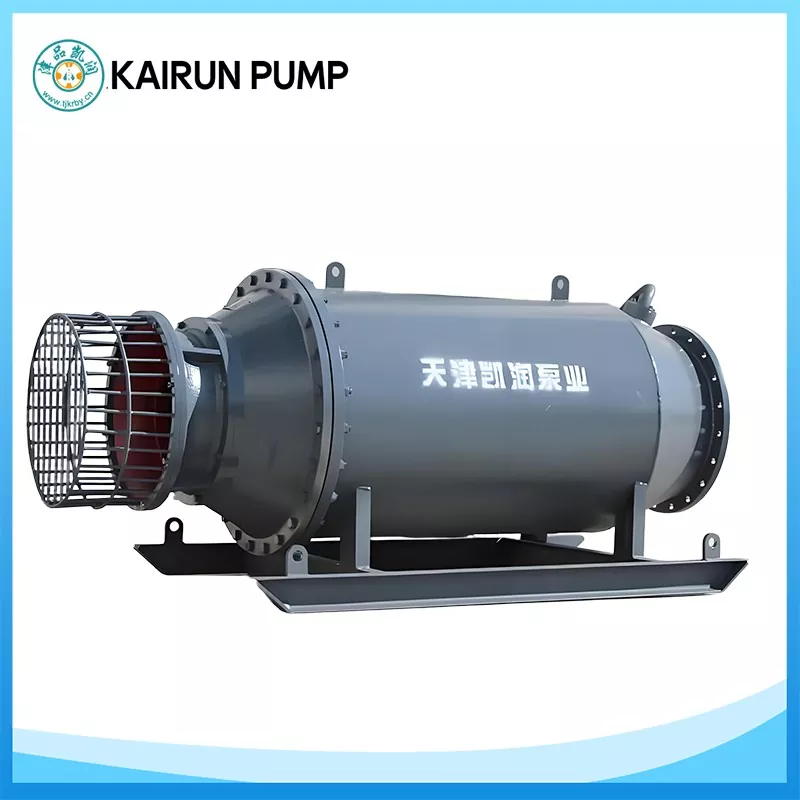
When I look at large water transfer projects, I rarely start by asking which pump is the cheapest. I start by asking which pump can keep water moving safely, steadily, and efficiently when the site conditions become difficult. That is why I have been paying closer attention to Tianjin Kairun Pump Industry Co., Ltd., a manufacturer whose pump solutions are built around real project needs rather than simple catalog selling. For flood control, drainage, irrigation, and water conservancy work, Submersible Axial Flow Pumps often give project owners a practical way to move huge water volumes at low head without building an oversized pump station.
In many municipal and agricultural projects, the biggest pain point is not only water volume. It is the combination of limited space, changing water levels, long running hours, installation cost, and energy pressure. I have seen buyers compare several pump types and still feel unsure because each option sounds useful on paper. My view is simple. If the project requires large flow, low lift, submerged operation, and reliable continuous drainage, axial flow technology deserves serious consideration.
Why Do High Flow Projects Need a Different Pumping Approach?
A large drainage or water transfer job is not the same as a small industrial circulation system. In high flow projects, the pump must move a broad water column with stable performance, often under low head conditions. If the wrong pump is selected, several problems appear quickly.
- Energy consumption rises because the pump is working outside its efficient range.
- Noise and vibration increase when the hydraulic design does not match the site.
- The pump station may require more civil work than expected.
- Maintenance becomes harder when the installation layout is too complex.
- Flood control or drainage response becomes slower during peak demand.
This is where Submersible Axial Flow Pumps become valuable. They are designed to push water along the axis of the impeller, making them especially suitable for low head and high flow applications. Instead of forcing a pump to do a job it was not designed for, I prefer choosing a pump type that naturally fits the water movement pattern.
What Are Submersible Axial Flow Pumps Best Used For?
I usually recommend this pump category when the project needs steady, high-capacity water movement rather than high pressure. The submerged structure also reduces the need for a large above-ground drive system, which can make the station cleaner, quieter, and easier to integrate into limited spaces.
| Project Scenario | Common Pain Point | How This Pump Type Helps |
|---|---|---|
| Urban flood control | Stormwater rises quickly and must be discharged fast | Large flow capacity supports rapid drainage during peak rainfall |
| Agricultural irrigation | Farmland needs stable water transfer from rivers or reservoirs | Low head operation helps move water efficiently over long running periods |
| Municipal drainage | Pump stations need compact installation and reliable operation | Submerged installation saves space and reduces surface equipment burden |
| Water conservancy projects | Water levels may change seasonally or suddenly | Submersible operation adapts better to changing water conditions |
| Industrial water transfer | Continuous operation requires stable hydraulic performance | Axial flow design supports high-volume transfer with lower energy waste |
For buyers who manage public infrastructure or engineering projects, this matching process matters. A pump may look powerful on a specification sheet, but the real question is whether it can solve the actual working condition. That is why I would rather evaluate pump type, installation method, flow requirement, head range, medium condition, and maintenance access together.
How Do Submersible Axial Flow Pumps Reduce Installation Pressure?
One reason I like Submersible Axial Flow Pumps is that they can simplify part of the installation burden. Since the motor and pump are designed for underwater operation, the system can reduce the need for complex transmission arrangements above the water surface. In some station layouts, this helps project teams save space and shorten the construction path.
For a buyer, that can mean fewer headaches during project planning. Civil construction, lifting arrangement, inlet and outlet layout, electrical control, and maintenance routes all affect the final cost. A pump that installs more directly can bring value beyond the purchase price.
- Compact submerged structure can reduce visible equipment above ground.
- Lower operating noise can improve the surrounding working environment.
- Integrated motor and pump design can make system planning more direct.
- Flexible installation options can help match different station designs.
- Good cooling conditions underwater can support long running operation.
Of course, I would not describe any pump as “one size fits all.” A responsible selection still needs project data. But when the site involves high water volume, low lift, and limited installation space, this type of pump often gives engineers a more balanced solution.
Which Product Advantages Matter Most to Real Buyers?
When I judge a pump for procurement, I care about more than a few attractive claims. I look at the features that directly affect operating cost, maintenance risk, and project reliability. For Submersible Axial Flow Pumps, the most important advantages are usually flow capacity, efficiency, submerged reliability, material selection, and customization.
| Advantage | Why It Matters | Buyer Benefit |
|---|---|---|
| High flow capacity | Large projects need quick and stable water movement | Better drainage, irrigation, and transfer performance |
| Low head efficiency | Using the wrong pump type wastes energy | Lower long-term operating cost |
| Submersible structure | Water level and site space may be difficult to control | More flexible installation and quieter operation |
| Durable sealing design | Underwater equipment must resist leakage risk | Longer service life and fewer unexpected shutdowns |
| Material options | Clean water, sewage, and corrosive media require different materials | Better matching for each working environment |
| Custom selection support | Each station has different flow, head, and layout requirements | More accurate pump performance and easier system integration |
This is also where manufacturer experience becomes important. A supplier should not only sell a pump model. It should help buyers understand whether the pump curve, motor power, material choice, protection level, and control system are suitable for the working condition.
Is Energy Efficiency Really That Important in Pump Selection?
Yes, and I would argue that energy efficiency is one of the most important parts of the buying decision. A pump used in drainage, irrigation, or water conservancy work may operate for long hours. Even a small difference in efficiency can become a large difference in annual electricity cost.
With Submersible Axial Flow Pumps, the main efficiency advantage comes from choosing the right hydraulic design for high-flow and low-head movement. When the pump structure matches the water transfer requirement, the motor does not need to fight against an unsuitable operating condition. That is why a lower-priced pump can become expensive later if it runs inefficiently every day.
- I check whether the flow range matches the real demand instead of only the maximum demand.
- I compare the head requirement with the pump’s efficient operating zone.
- I look at motor efficiency, sealing reliability, and protection design.
- I consider whether the pump station layout may cause avoidable hydraulic loss.
- I ask whether the supplier can help adjust the selection for site conditions.
For public drainage projects and agricultural systems, energy cost is not a side issue. It is part of the total ownership cost. A good pump should help the project stay stable without quietly draining the budget month after month.
Do Submersible Designs Make Maintenance Easier or Harder?
This is a fair question because many buyers worry that underwater equipment will be difficult to maintain. My answer is that maintenance depends on design quality, installation planning, and access conditions. A well-selected submersible pump can actually reduce several routine problems because it removes some exposed mechanical components and operates with better motor cooling.
For project owners, I would pay attention to these points before ordering.
- Is the pump easy to lift, inspect, and reinstall when maintenance is needed?
- Does the sealing system match long-term submerged operation?
- Are the material options suitable for the actual water quality?
- Can the electrical control cabinet provide reliable protection?
- Does the supplier provide clear installation and operation guidance?
In my experience, many maintenance problems begin before the pump is installed. Poor selection, unclear water quality data, wrong installation angles, and weak control protection can all shorten service life. A better purchase process reduces those risks from the start.
What Should I Check Before Buying Submersible Axial Flow Pumps?
If I were preparing a procurement request, I would not send only the pump name and ask for a price. I would prepare enough working condition details so the supplier can recommend a practical configuration. This saves time and avoids the common problem of receiving quotations that look similar but are not technically equal.
| Information to Prepare | Why It Is Needed |
|---|---|
| Required flow rate | Determines whether the pump can meet the real water movement demand |
| Total head | Helps confirm whether axial flow design is suitable |
| Water quality | Affects material choice, sealing design, and anti-corrosion requirements |
| Installation layout | Influences pump structure, outlet direction, and maintenance access |
| Power supply conditions | Helps match motor and control cabinet requirements |
| Operating schedule | Shows whether the pump needs to handle continuous or intermittent duty |
| Local environment | Important for flood areas, outdoor stations, coastal projects, or remote sites |
When this information is clear, the supplier can provide a more accurate recommendation. For customized water projects, this is much better than selecting a pump only by model name.
Why Would I Consider Tianjin Kairun Pump Industry Co., Ltd. for This Type of Project?
I would consider Tianjin Kairun Pump Industry Co., Ltd. because the company’s product direction fits large-scale water management needs. Its pump range covers axial flow pumps, mixed-flow pumps, submersible pumps, sewage pumps, centrifugal pumps, control cabinets, and related water pump accessories. That matters because many projects need more than one standalone pump. They need a matched system that considers flow, control, installation, and long-term service.
For Submersible Axial Flow Pumps, I care about whether the manufacturer understands municipal drainage, flood control, farmland irrigation, and industrial water transfer. These are not decorative applications. They are working systems that must perform when water levels rise, seasons change, or demand increases suddenly.
- The company can support different pump structures for varied installation needs.
- The product range is suitable for high-flow, low-head water transfer projects.
- Material and configuration options can be adjusted according to the medium.
- Electrical control solutions can be considered together with the pump system.
- Project-oriented selection support can help reduce wrong-model procurement risk.
I also like that the product category is not positioned only as a generic pump. It is tied to specific project conditions, such as drainage stations, irrigation systems, flood control, water conservancy, and municipal engineering. That makes the selection process more useful for buyers who need a working solution rather than a simple product listing.
How Can Buyers Avoid Costly Mistakes in Pump Procurement?
The most common mistake I see is choosing only by price or only by maximum flow. A pump with a large number on paper is not always the right pump for a real site. The better approach is to match pump design with the full operating condition.
Before confirming an order for Submersible Axial Flow Pumps, I would review these points carefully.
- Do the flow and head values match the project’s normal operating condition?
- Is the installation type suitable for the station structure?
- Is the pump material suitable for clean water, sewage, seawater, or lightly polluted water?
- Is the motor protection level appropriate for long-term submerged operation?
- Is there a control system plan for safe startup, overload protection, and monitoring?
- Can the supplier provide technical communication before production?
A cheaper pump becomes expensive if it causes downtime, repeated maintenance, excessive electricity consumption, or station modification. For large water projects, I would rather make the selection carefully at the beginning than pay for corrections later.
What Is the Practical Value of Submersible Axial Flow Pumps for Modern Water Management?
Modern water management is under pressure from heavier rainfall, urban expansion, agricultural water demand, and tighter cost control. That creates a real need for pump systems that can move water quickly while staying efficient and reliable. In this context, Submersible Axial Flow Pumps are not just another pump option. They are a practical answer to a very specific engineering challenge.
They support high-volume water transfer, adapt to submerged working conditions, and help simplify station layouts. They can serve flood control stations, irrigation networks, drainage systems, and industrial water transfer projects where low head and large flow are the key requirements. For buyers who want a pump that balances performance, installation convenience, and long-term operating cost, this category is worth serious attention.
If your project involves drainage, flood control, irrigation, or large-scale water transfer, I would suggest discussing the working conditions before making a purchase decision. Share your required flow, head, water quality, installation layout, and operating schedule with Tianjin Kairun Pump Industry Co., Ltd. so the team can help match the right pump configuration. To get technical support, request a quotation, or compare options for Submersible Axial Flow Pumps, please leave an inquiry or contact us today.