

Why Does a Tubular Pump Make More Sense When You Need Big Water Flow Without Big Energy Waste?
2026-04-24
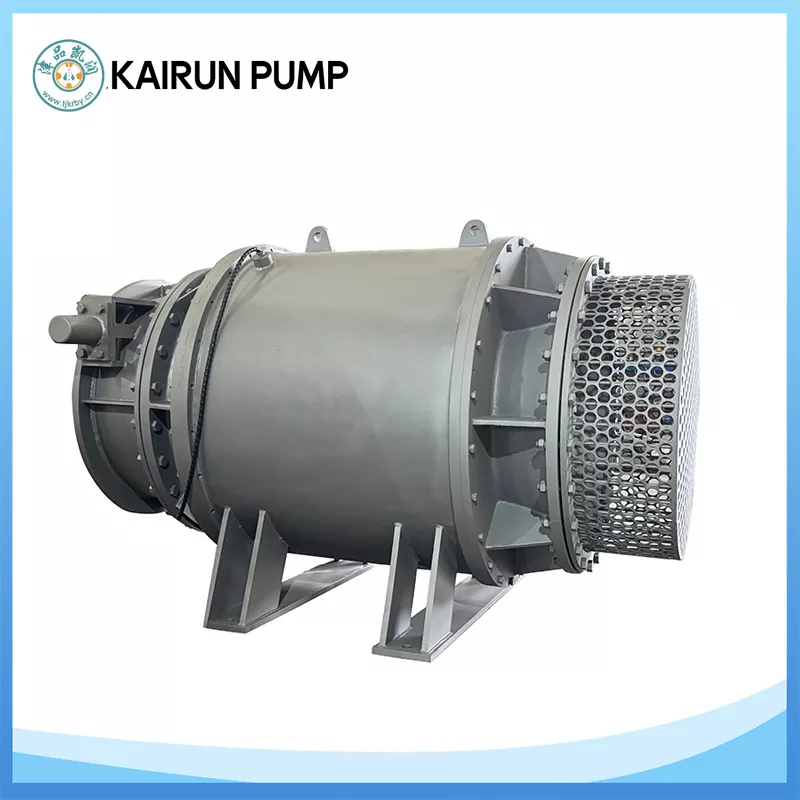
When I evaluate large-volume water transfer projects, I do not start by asking which pump looks the most powerful on paper. I start by asking which system will actually move water efficiently, fit the site, stay reliable over time, and avoid creating maintenance trouble a year later. That is exactly why I have been paying closer attention to how Tianjin Kairun Pump Industry Co., Ltd. approaches the Tubular Pump. In real projects, whether the job involves irrigation, drainage, flood control, or water diversion, I have found that buyers rarely struggle because they lack options. They struggle because too many options sound similar while performing very differently once installed.
A good pumping decision is rarely about chasing the lowest initial quote. It is usually about solving familiar headaches such as high operating costs, difficult civil works, unstable flow, limited installation space, and too much downtime during peak demand periods. A well-designed Tubular Pump answers those concerns in a very practical way. Its straight-through flow path, compact arrangement, and strong suitability for large-flow, low-head duties make it a serious solution for projects that cannot afford inefficiency disguised as savings.
What Problems Do Buyers Usually Face Before Choosing a Pumping System?
Before I recommend any pumping equipment, I like to look at the problems that typically push buyers into replacement, upgrade, or redesign. In my experience, the same pain points show up again and again.
- Energy bills keep rising because the pump is not matched to the real duty point.
- Civil construction becomes more expensive than expected because the installation footprint is too demanding.
- Flow delivery looks acceptable at first, but performance becomes inconsistent during continuous operation.
- Maintenance teams lose time on hard-to-access components and repeated shutdowns.
- Seasonal projects such as irrigation or flood discharge leave very little room for failure.
- Some systems move water, but they do so with too much turbulence, noise, and avoidable hydraulic loss.
That is where I see the real value of a Tubular Pump. It is not just another pump category added to a catalog. It is a structure and flow concept that directly addresses the mismatch between large water volume requirements and the limitations of older or less suitable pumping layouts.
Why Does a Tubular Pump Fit Large-Flow Water Transfer So Well?
When I explain this type of pump to non-technical buyers, I keep it simple. A tubular design is built around moving a large amount of water smoothly rather than forcing water through a more restrictive path. That difference matters. In applications where the head is relatively low but the required flow is high, the system benefits from a straighter hydraulic passage and a layout that reduces unnecessary resistance.
In practical terms, that means a Tubular Pump can help a project do more with less friction loss. I find this especially useful in canal pumping, agricultural irrigation zones, municipal drainage lines, and pumping stations where stable throughput matters more than chasing pressure figures that the site never truly needs.
Another point I pay attention to is layout flexibility. On many sites, space is not generous. A pump that can work well in a horizontal or inclined arrangement can simplify engineering decisions and reduce structural complications. That is not a small benefit. It can influence installation cost, access planning, and even project approval speed.
Which Advantages Become Most Visible After Installation?
Some equipment looks impressive in specifications but underwhelms once it enters daily use. I trust the advantages that become more obvious after installation, because those are the ones operators actually remember. With a properly selected Tubular Pump, several benefits tend to stand out quickly.
| Buyer Concern | What Usually Goes Wrong | How a Tubular Pump Helps |
| High operating cost | Hydraulic loss increases energy use over long run times | Smoother flow passage helps improve efficiency in large-flow service |
| Limited site space | Bulky layouts complicate civil works and equipment access | Compact structural arrangement supports cleaner project integration |
| Unstable water delivery | Pumps operate away from the real duty requirement | Designed for low-head, high-flow conditions where steady volume matters |
| Difficult maintenance | Shutdowns become frequent and repair planning gets harder | Well-matched design supports stable long-term service and easier system planning |
| Seasonal flood or irrigation pressure | Equipment cannot afford failure during critical windows | Reliable continuous operation is better suited to time-sensitive water management |
I also think buyers appreciate advantages that are easy to explain to finance teams. If a pump reduces wasted energy, avoids oversized construction, and lowers the risk of interruption, the argument becomes much stronger than simply saying it is “advanced.” Decision-makers usually want measurable logic, not decorative language.
How Can I Tell Whether a Tubular Pump Is Better Than a Conventional Alternative?
I never compare pumps in a vacuum. I compare them against the actual operating scenario. If the project needs high head and modest flow, a tubular design may not be the first answer I reach for. But if the project requires large-volume transfer over a low-head range, the comparison becomes much more favorable.
Here is the kind of checklist I use before leaning toward a Tubular Pump.
- I confirm whether the duty is truly large-flow and low-head rather than a mixed or misunderstood requirement.
- I review the site footprint and ask whether installation space is tight, awkward, or structurally expensive.
- I examine how many hours the system will operate, because efficiency matters more as run time increases.
- I ask how critical uptime is during irrigation season, flood periods, or municipal drainage events.
- I look at the full system, not just the pump, because pipe arrangement, controls, and maintenance access affect the final result.
If several of those conditions are true, I usually see the case for a tubular solution become much stronger. The conversation moves away from “Can this pump work?” and toward “Which configuration will work best for years without creating new problems?” That is the right question.
What Makes Energy Efficiency More Than Just a Marketing Claim?
I have noticed that energy efficiency is one of the most overused phrases in industrial selling, so I try to keep it tied to physical reality. Efficiency should not be treated as a slogan. It should come from reduced hydraulic loss, smoother water passage, and proper matching to actual operating conditions. That is one reason the Tubular Pump remains relevant in large-scale water transfer work. Its design logic is aligned with the duty itself.
In long-hour applications, even a moderate improvement in operating efficiency can influence the total ownership picture. That matters to municipalities, agricultural operators, engineering contractors, and infrastructure investors alike. The more consistently the pump runs, the more important that efficiency becomes. What looks like a small percentage difference in a brochure can become a meaningful cost difference over a working season or over multiple years.
I also think efficient pumping improves more than electricity consumption. It can reduce heat buildup, lower unnecessary system stress, and support steadier performance. Those are indirect gains, but they still affect maintenance schedules and operator confidence.
Why Do Installation Conditions Matter More Than Many Buyers Expect?
One mistake I often see is treating installation as a secondary issue. It is not. A pump that is hard to integrate into the site can quietly erase its own value before commissioning is complete. I pay close attention to foundation requirements, access routes, piping alignment, and the amount of civil adjustment needed. These practical details often decide whether a purchase ends up feeling smart or frustrating.
With a Tubular Pump, the structural form itself can help reduce some of that friction in project planning. A more integrated flow channel and a compact arrangement often support a cleaner installation concept, especially where the project needs to move substantial water volume without building an oversized pumping house around the equipment.
From my perspective, a good installation outcome usually delivers three things at once.
- It shortens the gap between procurement and operation.
- It lowers the chance of site-level redesign during construction.
- It gives maintenance teams a system that feels logical rather than improvised.
Which Applications Benefit Most From This Kind of Pump?
I would not treat every project the same, but several application types repeatedly stand out as strong matches. These are the areas where I most often see buyers ask practical questions that a tubular design can answer well.
- Agricultural irrigation projects that need dependable high-volume water delivery across long operating periods.
- Farmland drainage systems where quick water removal protects crops and schedules.
- Municipal flood control work where delayed discharge can create severe downstream costs.
- River and canal diversion systems where stable transfer is more important than excessive pressure.
- Reservoir and pumping station projects that need reliable continuous service.
- Coastal or water conservancy works where large-scale movement of water must remain controlled and efficient.
In all of these cases, the main question is not whether water can be moved. The question is whether it can be moved efficiently, safely, and repeatedly without building a system that is too expensive to run or too troublesome to maintain. That is why I keep returning to the practical strengths of the Tubular Pump.
How Should I Evaluate Long-Term Value Instead of Only the Purchase Price?
If I only compare the initial equipment quote, I miss the bigger picture. A lower purchase price can be attractive, but it tells only part of the story. I want to know how the pump will behave after installation, during peak demand, and across maintenance cycles. Long-term value usually comes from the balance of efficiency, reliability, site suitability, and service life.
Here is how I break that value down when making a serious buying decision.
| Cost Factor | Short-Term View | Long-Term View |
| Equipment price | Focuses on the invoice amount | Must be weighed against performance fit and expected operating life |
| Installation cost | Often underestimated early | Site compatibility can save major construction adjustment later |
| Energy use | May look secondary during procurement | Becomes a major cost driver in continuous or seasonal heavy use |
| Maintenance | Usually ignored in early comparison | Frequent downtime can cost more than the equipment difference itself |
| Operational stability | Assumed rather than verified | Critical for flood control, irrigation windows, and public infrastructure duties |
When I take this broader view, the decision becomes much clearer. A pumping solution should not simply be affordable to buy. It should be reasonable to build around, efficient to run, and dependable when the project needs it most.
What Should I Ask a Supplier Before Making the Final Decision?
I believe the quality of the supplier conversation matters almost as much as the pump itself. A serious project deserves more than a generic brochure and a price list. Before I move forward, I want clear answers about operating range, configuration options, testing, material choices, and supporting system components.
- Can the supplier help match the pump to the real flow and head conditions instead of a rough estimate?
- Can the installation layout be adapted to the site rather than forcing the site to adapt to the catalog?
- What testing or inspection process supports delivery quality?
- Can the supplier support complete pumping system integration rather than selling a single isolated unit?
- Will communication stay practical when technical adjustments are needed?
Those questions matter because a pump purchase is rarely isolated. It is part of a larger system decision. When the supplier understands that, the project usually moves more smoothly from design discussion to commissioning.
Why Is This the Moment to Choose a Smarter Pumping Solution?
Water transfer projects are under pressure to do more with tighter budgets, stricter operational expectations, and less tolerance for downtime. In that environment, I do not think buyers gain much from choosing equipment that only looks acceptable on paper. I would rather choose a solution that fits the real job and performs with fewer compromises.
That is exactly why a well-matched Tubular Pump deserves serious attention. It can help address large-flow demand, reduce avoidable hydraulic loss, simplify installation thinking, and support stable operation where reliability is not optional. If you are reviewing irrigation systems, flood control infrastructure, drainage upgrades, or water transfer stations, now is a good time to compare your current plan against a design that is built for these conditions.
If you are looking for a practical pumping solution that aligns with real project demands, this is the point where I would stop guessing and start the conversation. Review your duty conditions, compare the operating logic, and contact us for a clearer recommendation. The team at Tianjin Kairun Pump Industry Co., Ltd. can help you discuss the right Tubular Pump option for your application, reduce procurement uncertainty, and move your project forward with more confidence.