

Why Does an Air Operated Diaphragm Pump Often Solve More Problems Than Buyers Expect?
2026-04-24
When I evaluate fluid handling equipment for plants, workshops, or transfer skids, I usually care less about marketing language and more about what keeps a line running safely. That is exactly why companies such as Shanghai Crowns Pump Manufacture Co., Ltd. keep coming up in real-world discussions about reliable transfer equipment. A well-matched Air Operated Diaphragm Pump is not just another pump on a catalog page. In many applications, it becomes the practical answer when I need chemical compatibility, dry-run tolerance, safer operation in hazardous areas, and simpler maintenance without turning the whole system into a complicated engineering project.
I have seen buyers struggle with the same frustrating questions again and again. Will the pump clog when solids show up? Will aggressive chemicals shorten service life? Will maintenance shut down production too often? Will electrical equipment create safety concerns in a volatile environment? These are not abstract concerns. They affect uptime, labor cost, product quality, and purchasing risk. That is why I think a Air Operated Diaphragm Pump deserves a closer look whenever the job involves corrosive liquids, viscous media, slurry, or uncertain operating conditions.
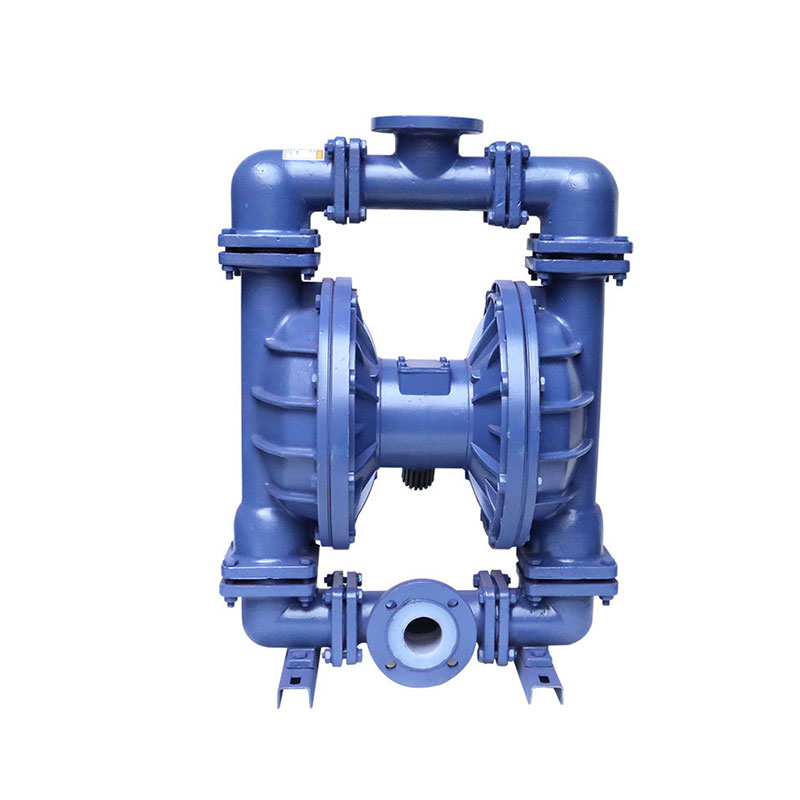
What Makes an Air Operated Diaphragm Pump So Different in Daily Use?
The biggest difference, from my perspective, is how forgiving this pump type can be. Instead of depending on a more delicate arrangement that performs well only inside a narrow operating window, an air-driven diaphragm design gives me room to work with real production conditions. Compressed air alternates the movement of diaphragms, which creates suction and discharge in a simple and effective way. That operating method helps explain why this type of pump is often selected for corrosive liquids, abrasive mixtures, and fluids that would make other pump styles complain very quickly.:contentReference[oaicite:1]{index=1}
- I can use it in environments where spark risk must be controlled because the pump is driven by compressed air rather than an onboard electric motor.:contentReference[oaicite:2]{index=2}
- I do not have to panic about occasional dry running in the same way I would with many other pump types, because diaphragm pumps are widely valued for dry-run capability.:contentReference[oaicite:3]{index=3}
- I can handle liquids with solids or variable viscosity more confidently because the pumping action is gentle and practical for mixed media.:contentReference[oaicite:4]{index=4}
- I can simplify startup because self-priming ability reduces the hassle of manual priming steps.:contentReference[oaicite:5]{index=5}
That combination matters a lot more than it sounds on paper. In an actual plant, operating flexibility saves time, protects staff, and reduces the number of small process failures that quietly drain profit.
Why Do So Many Buyers Switch After Fighting Leaks, Downtime, or Compatibility Issues?
I rarely see buyers change pump types just because they want something new. Most of the time, they switch because the old setup keeps creating avoidable problems. One line gets blocked by solids. Another pump loses prime. A seal fails after contact with aggressive fluid. The maintenance team gets called out too often. The purchasing team then realizes that the original “cheaper” choice was only cheaper on the quotation sheet.
When I compare life-cycle value rather than only purchase price, a Air Operated Diaphragm Pump often looks much more attractive. It can reduce the hidden costs that build up around unstable transfer conditions. If I know the process may involve acids, solvents, coatings, sludge, wastewater, or slurry, I would rather choose a pump that is designed to tolerate reality than one that demands perfect conditions every day.
| Common Buyer Pain Point | Why It Becomes Expensive | How an Air Operated Diaphragm Pump Helps |
|---|---|---|
| Frequent seal or component failure | Unexpected stoppages, spare part costs, labor time | Uses a simpler air-driven mechanism and can be matched with corrosion-resistant materials for tougher media |
| Dry running accidents | Equipment damage and emergency shutdowns | Known for dry-run capability, which reduces risk in unstable feed conditions |
| Poor performance with viscous or solids-laden fluids | Blockage, slow transfer, product waste | Handles viscous liquids, slurry, and suspended solids more effectively than many alternatives |
| Safety concerns in hazardous areas | Higher compliance pressure and operating risk | Air-powered operation supports use where explosion-proof considerations matter |
| Complicated priming and restart procedures | More downtime and operator frustration | Self-priming design makes restart easier in many practical installations |
Which Fluids and Industries Actually Benefit the Most?
I think one reason the Air Operated Diaphragm Pump stays relevant across industries is that it is not limited to one clean, predictable liquid. It can be adapted to very different operating demands depending on the body material and diaphragm selection. On the official Crowns Pump product page, the company highlights applications such as chemical processing, wastewater treatment, mining, pharmaceuticals, paint, and coatings, which lines up with the broader market logic for this pump type.:contentReference[oaicite:6]{index=6}
In my experience, the best-fit applications usually include the following situations.
- I need to move corrosive chemicals without taking unnecessary material-compatibility risks.
- I need to transfer abrasive slurry or dirty wastewater without constant clogging anxiety.
- I need a pump for coatings, inks, or viscous media that should not be over-sheared during transfer.
- I need a practical sanitary or clean-process option when the right construction material is selected.
- I need a flexible utility pump that can handle changing media better than a narrow-purpose design.
That flexibility is also why material choice matters so much. A stainless steel body may suit cleanliness and chemical resistance expectations in one setting, while polypropylene may make more sense for certain corrosive liquids and cost targets. Cast iron or aluminum can also be appropriate depending on wear conditions, mobility needs, and fluid characteristics. Crowns Pump itself presents several body material options on the product page, which is useful because buyers rarely have just one operating scenario to think about.:contentReference[oaicite:7]{index=7}
How Do I Judge Whether the Pump Will Really Match My Process?
I would never recommend choosing by headline claims alone. A good purchase decision comes from matching the pump to the process in a disciplined way. Before I ask for a quotation, I usually want answers to these questions.
- What exactly is the fluid, and does it contain solids, fibers, or crystals?
- What is the viscosity range at real operating temperature?
- Does the fluid attack metals, elastomers, or plastics?
- What suction and discharge conditions will the pump face during startup and continuous operation?
- Is the installation area sensitive to electrical risk or explosion-proof requirements?
- Will the pump run intermittently, continuously, or with frequent stop-start cycles?
- How much maintenance access do operators actually have?
Once I have those answers, I can choose more intelligently. Buyers sometimes focus too much on nominal flow rate and overlook the details that decide whether the pump will still perform six months later. For example, chemical compatibility is not a side issue. It is often the difference between a stable process and a slow stream of replacements, complaints, and cleanup work.
| Selection Factor | What I Look For | Why It Matters |
|---|---|---|
| Fluid chemistry | Acidic, alkaline, solvent-based, neutral, food-related | Determines suitable body and diaphragm materials |
| Solids content | Particle size, concentration, abrasiveness | Affects wear rate and transfer reliability |
| Viscosity | Low, medium, high, temperature-dependent | Influences flow behavior and air consumption |
| Safety environment | General industrial area or hazardous zone | Supports the case for air-driven equipment |
| Maintenance expectations | Routine access, spare parts planning, cleaning needs | Reduces downtime and long-term operating cost |
Is Lower Upfront Cost Really the Best Way to Buy a Pump?
I do not think so, at least not in isolation. A pump that looks inexpensive at the purchasing stage can become the most expensive option once downtime, maintenance labor, production loss, and process instability are added back into the picture. That is why I prefer to look at total operating value.
If a Air Operated Diaphragm Pump helps me avoid unplanned shutdowns, manage chemically difficult media, and reduce emergency maintenance, I am not really buying a pump alone. I am buying predictability. In industrial operations, predictability is valuable because it protects delivery schedules, labor planning, and customer confidence.
I also like the fact that this pump type is easier to explain internally. When I need approval from engineering, operations, and purchasing at the same time, it helps to choose equipment with a clear practical logic. Self-priming ability, dry-run tolerance, safer air-driven operation, and broad media adaptability are not vague benefits. They directly answer the objections most teams raise during equipment review.:contentReference[oaicite:8]{index=8}
What Should I Expect from a Reliable Supplier Instead of Just a Product Seller?
A serious buyer usually needs more than a product name and a price. I expect a supplier to help narrow down material selection, operating fit, and maintenance expectations based on the actual medium and application. That support becomes especially important when the line handles corrosive liquids, slurry, wastewater, or process fluids that vary throughout the day.
From the information published on the official product page, Crowns Pump positions itself as a long-established manufacturer with experience in industrial pump production and lists ISO 9001, ISO 14001, and ISO 45001 certifications. Those points matter because they suggest a company is thinking beyond one-off sales and paying attention to quality systems, environmental management, and workplace safety.:contentReference[oaicite:9]{index=9}
Still, what matters most to me is whether the supplier can discuss applications in a grounded way. I want to know whether they understand chemical transfer, wastewater, mining slurry, coatings, and sanitary-related scenarios well enough to recommend a workable match instead of pushing one model at every buyer.
How Can I Reduce Purchasing Risk Before I Place the Order?
If I wanted to minimize mistakes, I would do four things before confirming the model.
- I would share full fluid details, including concentration, solids, and temperature, instead of giving only a generic liquid name.
- I would confirm whether the pump may run dry, cycle frequently, or face suction limitations during operation.
- I would ask the supplier to recommend body and diaphragm materials based on compatibility rather than price alone.
- I would review the maintenance approach in advance so spare parts planning does not become an afterthought.
Those steps sound simple, but they prevent many of the purchasing problems I see later. A pump fails less often when it was matched honestly from the beginning. That is exactly where a well-chosen Air Operated Diaphragm Pump can stand out. It gives me more tolerance for real operating conditions, and that makes the whole system easier to manage over time.
Why Would I Reach Out Now Instead of Waiting for Another Failure?
Because waiting usually makes the next purchase more urgent and less thoughtful. If your current transfer setup is causing repeated downtime, material compatibility concerns, messy maintenance, or safety pressure in hazardous areas, this is the right time to review whether a better pump type would lower risk. If you are comparing options for chemical handling, wastewater, slurry, viscous fluids, or mixed-media transfer, contact us and discuss your application with a team that understands how to match the pump to the process. Shanghai Crowns Pump Manufacture Co., Ltd. can help you evaluate the right Air Operated Diaphragm Pump configuration for your working conditions. If you want a quotation, model recommendation, or technical discussion for your project, contact us today and leave your inquiry.